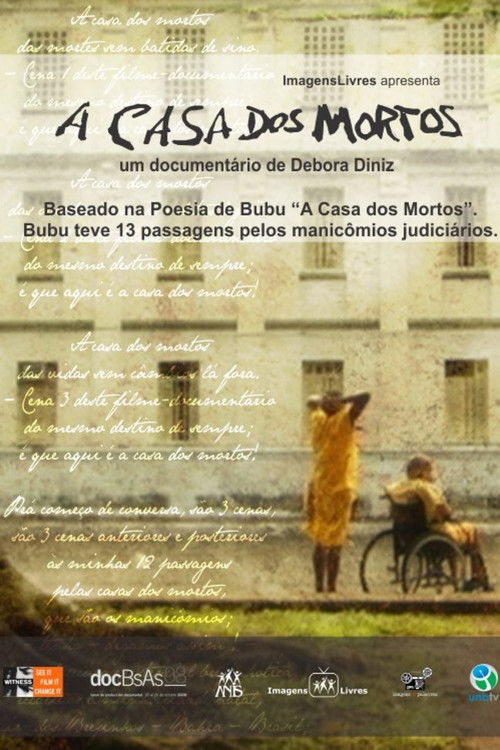
The House of the Dead 2009
Dive into the haunting world of *The House of the Dead (2009)*, a gripping documentary that sheds light on Brazil's judicial asylums—hybrid institutions blending hospitals and prisons.
Director: Debora Diniz
Frequently Asked Questions
What is The House of the Dead (2009) about?
*The House of the Dead* is a documentary that explores Brazil's judicial asylums, institutions that imprison individuals deemed 'insane' or 'dangerous.' Through the lens of poet Bubu's experiences, the film weaves together three tragic stories, revealing the forgotten lives and deaths within these systems. It blends poetry and protest to challenge the ethics of these hybrid institutions.
Who directed The House of the Dead?
The film was directed by Debora Diniz, a filmmaker and researcher known for her work on social justice and human rights issues in Brazil.
Who stars in The House of the Dead?
The documentary centers on Bubu, a poet whose personal story anchors the film, along with the real-life stories of Jaime, Antonio, and Almerindo.
Is The House of the Dead (2009) worth watching?
While *The House of the Dead* is a raw and confronting documentary, its poetic approach makes it a compelling watch for those interested in social justice and unheard stories. Its 24-minute runtime keeps the experience intense but digestible, though viewers should be prepared for heavy themes.
How long is The House of the Dead?
The runtime of *The House of the Dead* is 24 minutes.
🎥 Trailer
About The House of the Dead (2009) — A Poetic Exposé of Brazil's Judicial Asylums
Dive into the haunting world of *The House of the Dead (2009)*, a gripping documentary that sheds light on Brazil's judicial asylums—hybrid institutions blending hospitals and prisons. Directed by Debora Diniz, this 24-minute film follows Bubu, a poet whose own experiences within these forgotten institutions inspired the title poem, *The House of the Dead*. Through three raw, interconnected stories, the documentary exposes the lives of men like Jaime, Antonio, and Almerindo, who were deemed threats to society and condemned to lifelong confinement. Diniz masterfully blends poetry, protest, and stark reality to question the ethics of these institutions, revealing a cycle of silence and suffering. The film's atmosphere is heavy with urgency, as it confronts the viewer with the invisible deaths that occur behind closed doors.
At its core, *The House of the Dead* is a meditation on injustice, resilience, and the blurred lines between care and punishment. The documentary's poetic lens transforms a grim subject into a searing call for awareness, leaving audiences to grapple with the moral weight of these judicial asylums. With its concise runtime and unflinching gaze, this short but powerful film challenges societal norms and demands reflection on who truly belongs behind locked doors.