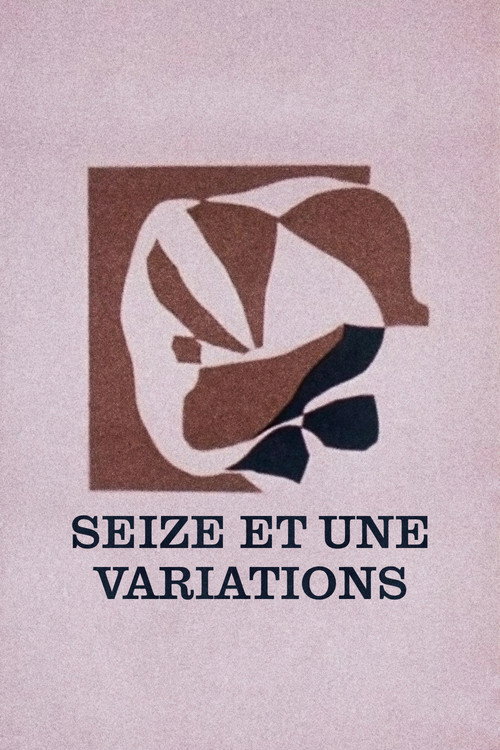
16 et 1 Variations 1980
Pierrette Ayme's *16 et 1 Variations (1980)* is a mesmerizing experimental short film that reimagines Albert Ayme's 1963 abstract visual composition through a series of intricate, evolving structures.
Director: Pierrette Ayme
Frequently Asked Questions
What is 16 et 1 Variations (1980) about?
The film is a cinematic reinterpretation of Albert Ayme's 1963 abstract work, exploring variations through layered visuals and sound. Each segment acts as an independent structure, evolving organically while maintaining its own identity.
Who directed 16 et 1 Variations?
Director Pierrette Ayme crafted this experimental short, drawing inspiration from her namesake Albert Ayme's original compositions.
Who stars in 16 et 1 Variations?
Cast details for this avant-garde short are not publicly listed.
Is 16 et 1 Variations (1980) worth watching?
As an unrated experimental film, it's a niche pick—but perfect for fans of abstract cinema and visual music. Its 18-minute runtime makes it an accessible yet profound experience for those open to non-traditional storytelling.
How long is 16 et 1 Variations?
The film runs for 18 minutes, offering a dense, immersive viewing experience.
About 16 et 1 Variations (1980) — Pierrette Ayme's Experimental Visual Symphony
Pierrette Ayme's *16 et 1 Variations (1980)* is a mesmerizing experimental short film that reimagines Albert Ayme's 1963 abstract visual composition through a series of intricate, evolving structures. Crafted with transparent cutouts and layered textures, the film transforms each variation into an autonomous work of art, where every frame feels like a stony runaway caught in motion. The haunting score by Jean-Yves Bosseur elevates each shift in form, creating a hypnotic dialogue between music and movement that lingers long after the credits roll.
This 18-minute cinematic experiment defies conventional narrative, instead inviting viewers into a meditative exploration of form, rhythm, and transformation. By tracing the opposite path of the original painter's creative process, Ayme's film becomes a study in contrasts—solidity and fluidity, stasis and flux—all rendered through meticulous, almost architectural precision. The result is a visual and auditory experience that feels at once ancient and avant-garde, challenging perceptions of what short filmmaking can achieve.