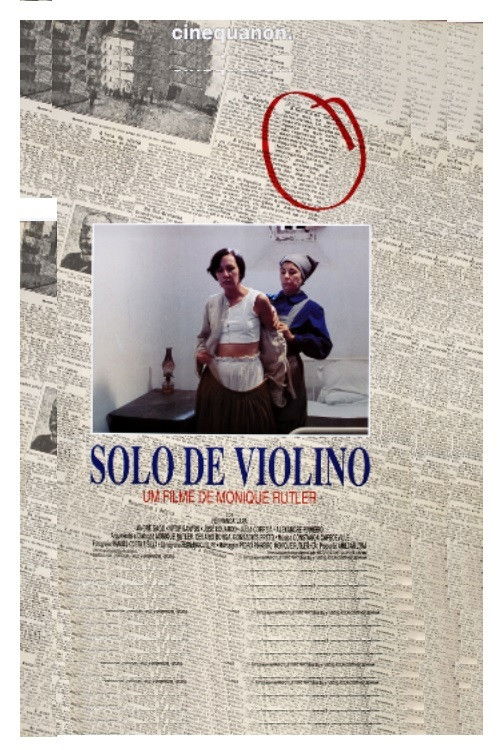
Solo de Violino 1990
In Monique Rutler's *Solo de Violino* (1990), a gripping drama-romance unfolds against the backdrop of Lisbon's high society in the early 20th century.
Director: Monique Rutler
Cast


Frequently Asked Questions
What is *Solo de Violino* (1990) about?
*Solo de Violino* follows Adelaide Coelho da Cunha, a cultured and privileged woman married to a newspaper director, who finds herself drawn to her family's chauffeur—a man from a lower social class. Their intense affair challenges the rigid norms of her world, forcing her to confront the consequences of defying expectations in a society that values tradition above all.
Who directed *Solo de Violino*?
*Solo de Violino* was directed by Monique Rutler, a filmmaker known for her ability to weave social commentary into compelling narratives.
Who stars in *Solo de Violino*?
The film features Fernanda Lapa as Adelaide Coelho da Cunha, alongside Victor Santos, André Gago, Marques D'Arede, and José Eduardo in key roles.
Is *Solo de Violino* (1990) worth watching?
Though unrated on IMDb, *Solo de Violino* stands out for its bold exploration of class and romance, offering a thought-provoking blend of drama and social critique. Fans of period pieces with emotional depth and strong performances will find much to appreciate in this understated yet powerful film.
How long is *Solo de Violino*?
*Solo de Violino* runs for 98 minutes.
About Solo de Violino (1990) — A Forbidden Romance Sparking Social Rebellion
In Monique Rutler's *Solo de Violino* (1990), a gripping drama-romance unfolds against the backdrop of Lisbon's high society in the early 20th century. The film centers on Adelaide Coelho da Cunha, a sophisticated woman married to Alfredo da Cunha, the director of the esteemed *Diário de Notícias*, and mother to their twenty-year-old son, José. When Adelaide embarks on a passionate affair with the family chauffeur—a man from a markedly different social class—her defiance of societal norms and the rigid expectations of a wife and mother sets the stage for a story of both liberation and turmoil. The film captures the tension between personal desire and public reputation, exploring themes of class divide, moral ambiguity, and the consequences of breaking free from tradition.
With Fernanda Lapa delivering a nuanced portrayal of Adelaide, *Solo de Violino* blends emotional depth with social critique, creating an atmosphere that is as intimate as it is provocative. The cinematography and performances underscore the film's exploration of love as both a liberating force and a catalyst for conflict, making it a poignant reflection on the complexities of human relationships and societal constraints.