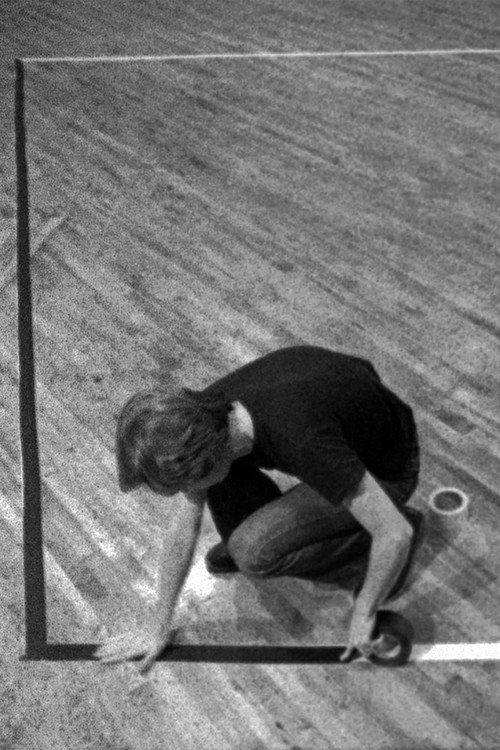
Black on White Tape 1975
Dive into *Black on White Tape (1975)*, a mesmerizing 9-minute experimental short by visionary filmmaker David Haxton. This minimalist piece unfolds as a deceptively simple yet profound exploration of film's fundamental elements—lines, frames, and the illusions they create.
Director: David Haxton
Frequently Asked Questions
What is Black on White Tape (1975) about?
*Black on White Tape* is a hypnotic, abstract experiment in visual composition, where filmmaker David Haxton uses tape to trace the boundaries of the cinematic frame. By drawing lines within the frame, the short deconstructs how we perceive space, movement, and the flatness of the projected image, turning a simple act into a profound meditation on film's formal language.
Who directed Black on White Tape?
David Haxton directed *Black on White Tape* in 1975. Known for his innovative approach to experimental filmmaking, Haxton's work often challenges conventional storytelling through minimalist visual techniques.
Who stars in Black on White Tape?
Cast details for *Black on White Tape* are not publicly listed, as the film is a conceptual piece with no credited actors.
Is Black on White Tape (1975) worth watching?
*Black on White Tape* is a niche but fascinating entry for fans of experimental cinema or those curious about the building blocks of film language. At just 9 minutes, its impact comes from its bold simplicity and thematic depth rather than entertainment value. If you appreciate avant-garde works that prioritize form over narrative, it's a short but rewarding watch.
How long is Black on White Tape?
*Black on White Tape* runs for 9 minutes.
About Black on White Tape (1975) — David Haxton's 9-Minute Experimental Masterpiece Explained
Dive into *Black on White Tape (1975)*, a mesmerizing 9-minute experimental short by visionary filmmaker David Haxton. This minimalist piece unfolds as a deceptively simple yet profound exploration of film's fundamental elements—lines, frames, and the illusions they create. Haxton's camera lingers on a roll of white tape placed atop a black one, then methodically traces the boundaries of the screen with tape, revealing how the flatness of cinema belies its depth. Through repetitive, geometric movements, the film strips away narrative to focus on the raw aesthetics of visual composition, challenging viewers to reconsider how we perceive motion, space, and the very fabric of the moving image. Its stark contrasts and deliberate pacing evoke a meditative stillness, blending conceptual art with the raw material of filmmaking itself.
Often cited as a landmark in avant-garde cinema, *Black on White Tape* transforms a simple act—taping lines within a frame—into a meditation on perception and the boundaries of art. The film's hypnotic rhythm and unadorned aesthetic create an immersive experience that lingers long after the final frame. It's a work that demands attention not for its story, but for its bold challenge to how we interpret the visual language of cinema. Whether you're a cinephile or a casual observer, its minimalist power lies in its ability to make the invisible structures of filmmaking strikingly visible.