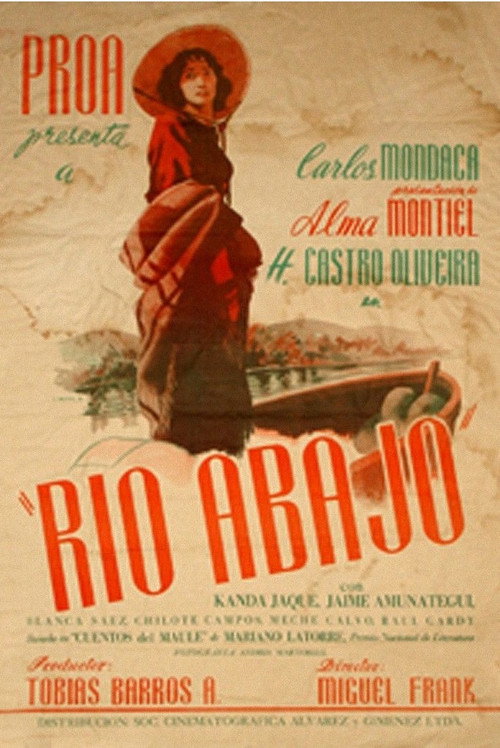
Río Abajo 1950
Step back to 1950 and drift down the Maule river with *Río Abajo*, a haunting drama directed by Miguel Frank that explores love, temptation, and the fragility of dreams.
Director: Miguel Frank
Cast
Frequently Asked Questions
What is Río Abajo (1950) about?
A young peasant woman named Rosario travels along the Maule river to find work in a morally ambiguous household. Torn between loyalty to a rugged fisherman and the seductive charm of a local hairdresser, she grapples with choices that will alter her future forever.
Who directed Río Abajo?
Miguel Frank directed *Río Abajo* in 1950, crafting a subtle yet powerful drama steeped in rural Chilean life and human desire.
Who stars in Río Abajo?
The film features Carlos Mondaca as Juan, Alma Montiel as Rosario, and Hernán Castro as Don Ramón in pivotal roles that drive the emotional core of the story.
Is Río Abajo (1950) worth watching?
Though unrated on IMDb, *Río Abajo* offers a rare glimpse into 1950s Chilean drama with strong performances and a visually rich setting. Fans of character-driven stories and period films with moral complexity will find it quietly compelling.
How long is Río Abajo?
Río Abajo runs for 85 minutes, a concise window to experience its emotional tide and atmospheric storytelling.
About Río Abajo (1950) — A River's Lure: Love, Temptation, and the Maule's Dark Currents
Step back to 1950 and drift down the Maule river with *Río Abajo*, a haunting drama directed by Miguel Frank that explores love, temptation, and the fragility of dreams. The story follows Rosario, a radiant young peasant who journeys along the river to find work in a shadowy household. Her heart soon belongs to Juan, a strong and honest fisherman whose devotion promises stability. Yet when the charming Don Ramón—a local hairdresser with wandering eyes—entices her with fleeting promises, Rosario's journey takes a turbulent turn, revealing how quickly desire can reshape fate. Frank crafts a quiet, atmospheric tale where every ripple on the water mirrors the inner conflicts of its characters.
Set against the lush, sun-dappled backdrop of rural Chile, *Río Abajo (1950)* immerses viewers in a world where beauty and danger flow side by side. The film blends raw emotional stakes with the natural rhythm of river life, creating a mood that lingers long after the credits roll. With its focus on class, seduction, and survival, it remains a poignant snapshot of mid-century social dynamics, anchored by raw performances that feel as authentic as the river itself.