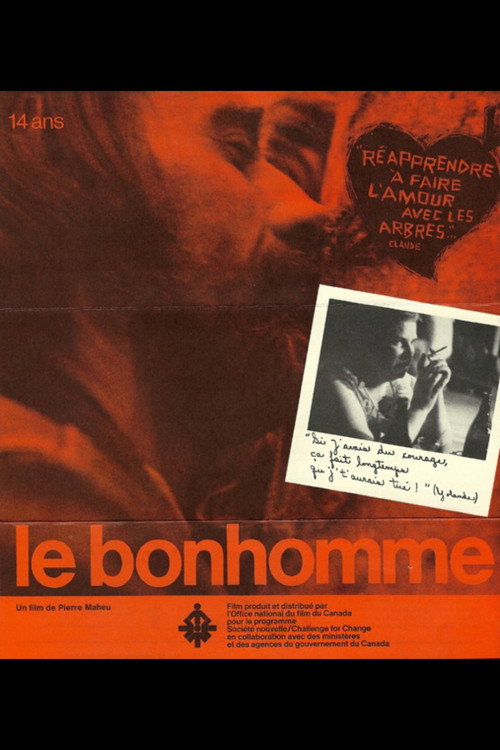
Le bonhomme 1972
Step into the intimate world of early 1970s Quebec through *Le bonhomme (1972)*, Pierre Maheu's quietly powerful documentary that captures the essence of everyday life with raw authenticity.
Director: Pierre Maheu
Cast
Frequently Asked Questions
What is Le bonhomme (1972) about?
*Le bonhomme* is a documentary that follows the Lachapelle family through their daily routines, offering a window into their lives and community in early 1970s Quebec. The film captures intimate moments—both mundane and meaningful—revealing the ties that bind individuals to their culture and heritage.
Who directed Le bonhomme?
Pierre Maheu directed *Le bonhomme*. His approach blends observational documentary techniques with a sensitive, unobtrusive style, creating a film that feels both authentic and deeply human.
Who stars in Le bonhomme?
The documentary stars the Lachapelle family members: Claude Lachapelle, Yolande Lachapelle, and Suzanne Lachapelle.
Is Le bonhomme (1972) worth watching?
While *Le bonhomme* is a niche documentary, its honest portrayal of a specific time and place offers a rewarding experience for fans of observational cinema. Its short runtime and minimalist approach make it accessible, though viewers seeking dramatic narratives may find it underwhelming.
How long is Le bonhomme?
*Le bonhomme* runs for 58 minutes.
About Le bonhomme (1972) — A Raw Portrait of 1970s Quebec Life
Step into the intimate world of early 1970s Quebec through *Le bonhomme (1972)*, Pierre Maheu's quietly powerful documentary that captures the essence of everyday life with raw authenticity. This 58-minute portrait immerses viewers in the rhythms of a family and their community, blending observational footage with a reflective tone that lingers long after the screen fades. Maheu's lens focuses on the bonds between Claude, Yolande, and Suzanne Lachapelle—real people navigating the complexities of identity, tradition, and change in a rapidly evolving society. The film's unflinching gaze and understated storytelling invite audiences to ponder universal themes of home and belonging, all while preserving a slice of history often overlooked.
Woven with a sense of nostalgia and quiet dignity, *Le bonhomme* stands as a time capsule of its era, offering a glimpse into the lives of ordinary Québécois during a pivotal moment. Without dramatic embellishments, Maheu crafts a cinematic experience that feels both personal and profound, where the simplicity of daily routines reveals deeper truths about culture and connection. For those who appreciate documentaries that prioritize substance over spectacle, this short but impactful film is a hidden gem worth discovering.