Drawing Houses 1982
David Haxton's experimental short film *Drawing Houses* (1982) offers a minimalist yet mesmerizing exploration of perception and creation.
Director: David Haxton
Frequently Asked Questions
What is Drawing Houses (1982) about?
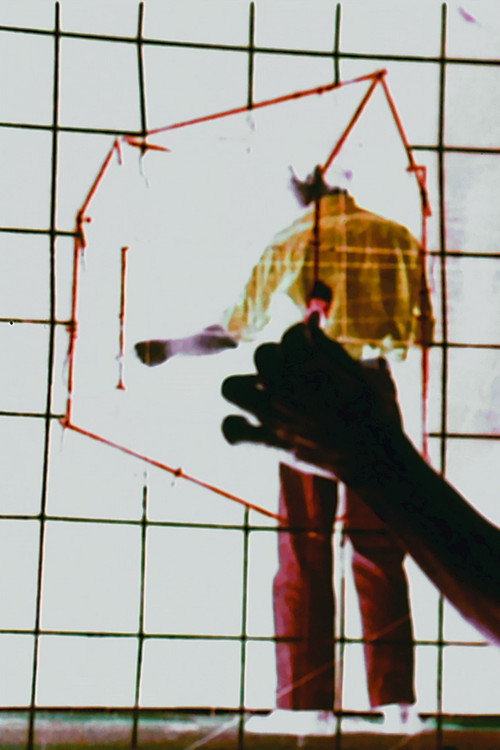
*Drawing Houses* is a 12-minute experimental film divided into two parts, where performers create drawings of houses directly on the floor. Shot from an overhead perspective, the film plays with spatial perception, making the drawings appear as if they exist on the same plane as the projected image. The result is a thought-provoking exploration of art, reality, and the act of creation.
Who directed Drawing Houses?
Drawing Houses was directed by David Haxton, an experimental filmmaker known for his innovative approach to visual storytelling and spatial perception in short films.
Who stars in Drawing Houses?
The film features performers whose identities are not widely documented, as *Drawing Houses* prioritizes the act of creation over individual recognition.
Is Drawing Houses (1982) worth watching?
While *Drawing Houses* may not appeal to mainstream audiences due to its abstract nature, it offers a fascinating study of visual perception and artistic process. Its brevity and experimental style make it ideal for viewers interested in avant-garde cinema or artists seeking inspiration from unconventional narrative techniques.
How long is Drawing Houses?
Drawing Houses has a runtime of 12 minutes.
About Drawing Houses (1982) — David Haxton's Minimalist Masterpiece of Spatial Illusion
David Haxton's experimental short film *Drawing Houses* (1982) offers a minimalist yet mesmerizing exploration of perception and creation. Over just 12 minutes, the film unfolds in two distinct parts, each revealing a performer sketching a house directly onto the floor as the camera captures the scene from above. The first part introduces us to the process through a striking overhead perspective, framing the act of drawing as an act of spatial illusion—where lines and shapes defy the receding plane of the floor. The second part shifts the focus, deepening the viewer's engagement with the artist's interplay between reality and representation. The film's stark simplicity belies its rich thematic layers, inviting reflection on architecture, memory, and the boundaries between observer and creator.
Haxton's approach transforms an everyday act—drawing—into a meditative study of form and illusion. The absence of dialogue and reliance on visual storytelling create an atmosphere that is both contemplative and quietly hypnotic. *Drawing Houses* doesn't just show you a house being drawn; it challenges you to reconsider how we perceive space and art itself. Whether you're a fan of avant-garde cinema or simply curious about unconventional narratives, this short film promises a uniquely immersive experience that lingers long after the credits roll.