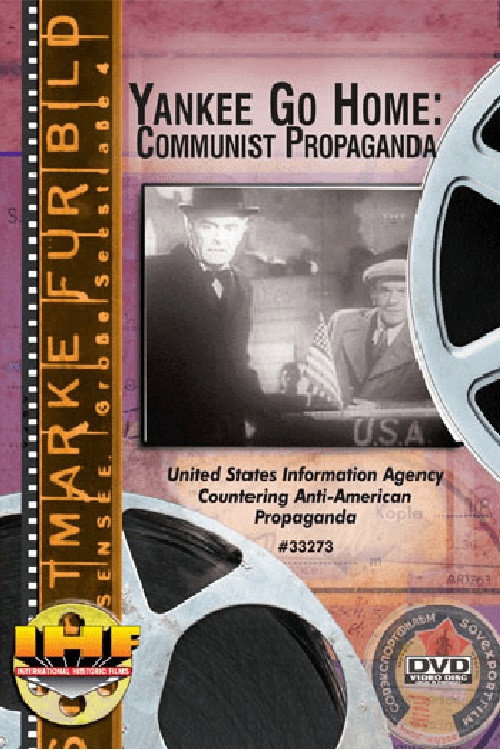
Yankee Go Home: Communist Propaganda 1958
Step back to the Cold War era with *Yankee Go Home: Communist Propaganda* (1958), a sharp 42-minute documentary that peels back the Iron Curtain to reveal how anti-American narratives were woven into Soviet media. Led by George V. Allen, the first director of the U.S.
Cast
Frequently Asked Questions
What is Yankee Go Home: Communist Propaganda (1958) about?
This 1958 documentary explores how the U.S. Information Agency countered Soviet anti-American propaganda in cinema. It examines Soviet films and footage from a Moscow youth festival, dissecting portrayals of America to reveal the era's ideological clashes.
Who directed Yankee Go Home: Communist Propaganda?
Director information is not available.
Who stars in Yankee Go Home: Communist Propaganda?
The film features commentary from George V. Allen, Ernest K. Lindley, John C. Weaver, and military figures Bascom Neal and Raymond G. Davis.
Is Yankee Go Home: Communist Propaganda (1958) worth watching?
As a historical document of Cold War propaganda tactics, it's a compelling watch for history and film buffs. At 42 minutes, it's concise but heavy on archival footage. While not a modern thriller, its insights into media manipulation remain timeless.
How long is Yankee Go Home: Communist Propaganda?
The runtime is 42 minutes.
About Yankee Go Home: Communist Propaganda (1958) — Inside the 1950s propaganda war on film
Step back to the Cold War era with *Yankee Go Home: Communist Propaganda* (1958), a sharp 42-minute documentary that peels back the Iron Curtain to reveal how anti-American narratives were woven into Soviet media. Led by George V. Allen, the first director of the U.S. Information Agency, this film dissects the tactics used to counter propaganda in films and youth festivals, blending sober analysis with rare footage from Moscow Stadium and Grigori Alexandrov's *Meeting on the Elbe*. The atmosphere crackles with tension as it contrasts American ideals against cinematic portrayals of U.S. aggression, offering a fascinating snapshot of ideological warfare on screen.
This forgotten gem isn't just a historical artifact—it's a window into the power of propaganda and how media shaped global perceptions during one of history's most polarized decades.