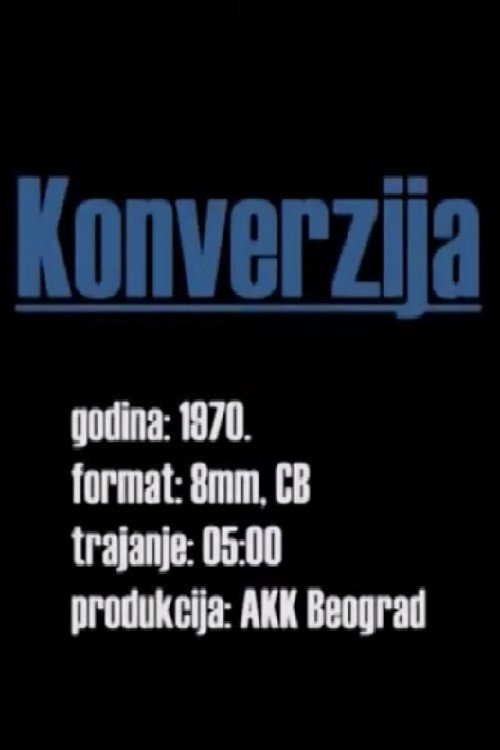
Conversion 1970
Dive into the hypnotic minimalism of *Conversion (1970)*, Vjekoslav Nakić's enigmatic 8mm experimental short that distills drama into its most concentrated form.
Director: Vjekoslav Nakić
Frequently Asked Questions
What is Conversion (1970) about?
This eight-millimeter experimental short by Vjekoslav Nakić compresses drama into a five-minute visual puzzle. Without a single word, it explores transformation through fleeting images that feel both personal and universal.
Who directed Conversion?
Conversion was directed by Vjekoslav Nakić, a filmmaker known for pushing boundaries within experimental cinema.
Who stars in Conversion?
Cast details for *Conversion* are not publicly listed, leaving its focus entirely on visual storytelling rather than performances.
Is Conversion (1970) worth watching?
While unrated and severely obscure, *Conversion* offers a rare snapshot of early experimental filmmaking. Its atmospheric intensity and brevity make it a rewarding watch for fans of the avant-garde, even if it's far from mainstream appeal.
How long is Conversion?
The film runs for 5 minutes, making it a brief but immersive experience.
About Conversion (1970) — A 5-Minute Experimental Drama That Redefines Atmosphere
Dive into the hypnotic minimalism of *Conversion (1970)*, Vjekoslav Nakić's enigmatic 8mm experimental short that distills drama into its most concentrated form. Clocking in at just five minutes, this obscure gem transforms fleeting moments into a meditative exploration of transformation, silence, and the unseen forces that shape everyday life. Shot on grainy 8mm film, the project carries the raw texture of a bygone era, evoking nostalgia while challenging viewers to find meaning in its abstract visuals. The absence of dialogue heightens its atmospheric tension, making it a curiosity for cinephiles drawn to avant-garde cinema's ability to turn simplicity into profundity.
Despite its brevity, *Conversion (1970)* lingers like a half-remembered dream, its stark imagery refusing to fade. The film's experimental nature invites interpretation, whether as a comment on personal change, societal shifts, or the fluidity of identity. Nakić's direction leans into ambiguity, leaving audiences to decipher the story's undercurrents—a testament to the power of short-form storytelling when wielded with precision and intent.