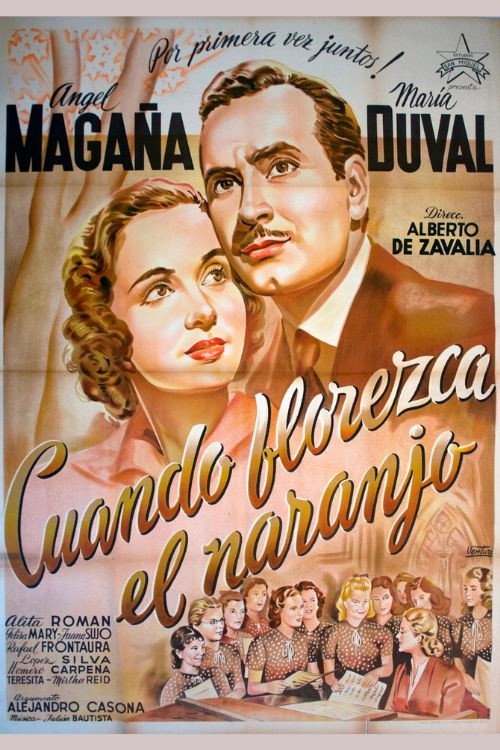
Cuando florezca el naranjo 1943
When a charming new teacher arrives at an all-girls boarding school in 1943 Argentina, he brings more than just lessons—he brings a whirlwind of laughter, mischief, and unexpected romance.
Director: Alberto de Zavalía
Cast








Frequently Asked Questions
What is *Cuando florezca el naranjo* (1943) about?
This 1943 Argentine comedy follows a disciplined girls' boarding school turned upside down by the arrival of a charismatic new teacher. His presence sparks a wave of playful antics and unexpected romance among the students, blending humor with a nostalgic schoolyard charm.
Who directed *Cuando florezca el naranjo*?
Alberto de Zavalía, a prominent figure in Argentine cinema, directed this light-hearted gem, known for his ability to balance comedy with heartfelt storytelling.
Who stars in *Cuando florezca el naranjo*?
Lead roles are played by Ángel Magaña, María Duval, Alita Román, Felisa Mary, and Juana Sujo, with Rafael Frontaura adding to the ensemble cast.
Is *Cuando florezca el naranjo* (1943) worth watching?
Though unrated on IMDb, this classic Argentine comedy offers a charming escape with its witty dialogue and nostalgic setting. Fans of vintage films and light-hearted romances will likely find its playful energy delightful, even if it's more of a period piece than a modern hit.
How long is *Cuando florezca el naranjo*?
The runtime of *Cuando florezca el naranjo* is 66 minutes.
About Cuando florezca el naranjo (1943) — Classic Argentine Comedy with Ángel Magaña and María Duval
When a charming new teacher arrives at an all-girls boarding school in 1943 Argentina, he brings more than just lessons—he brings a whirlwind of laughter, mischief, and unexpected romance. Under the direction of Alberto de Zavalía, *Cuando florezca el naranjo* (1943) blends light-hearted comedy with the playful chaos of youth, as the disciplined routines of the elegant students are upended by the arrival of their handsome instructor. Starring Ángel Magaña and María Duval, the film captures a vibrant atmosphere where wit and charm collide, creating a delightful escape into the golden age of Argentine cinema.
Set against the backdrop of a formal educational institution, the movie explores themes of order versus rebellion, first impressions, and the transformative power of unexpected connections. The title, which translates to "When the Orange Tree Blooms," hints at a sense of renewal and blossoming possibilities, mirroring the emotional awakening of the young women under the teacher's influence. This classic comedy is a nostalgic gem for fans of vintage cinema, offering a blend of humor and heart that lingers long after the credits roll.