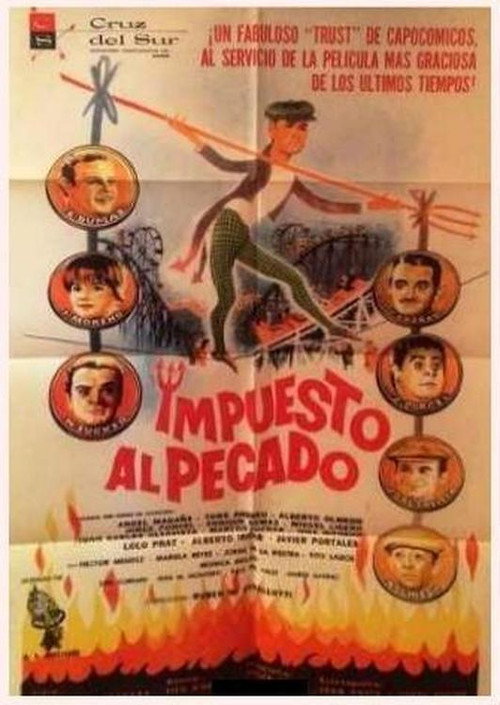
Flor de piolas 1969
Set against the sun-drenched backdrop of late-1960s Argentina, *Flor de piolas* (1969) delivers a spirited slice-of-life comedy following a roguish gang of blackmailers who wander from town to town, carefully selecting their next unsuspecting victims.
Director: Rubén W. Cavalloti
Cast








Frequently Asked Questions
What is Flor de piolas (1969) about?
This 1969 comedy follows a traveling gang of blackmailers who travel between towns, carefully picking their targets for schemes that blend cunning and chaos. Think of it as a roguish road trip where every stop brings a new round of clever deception.
Who directed Flor de piolas?
Rubén W. Cavalloti helmed this Argentine comedy, guiding a cast of comedic talents through its lighthearted mischief.
Who stars in Flor de piolas?
The film stars Ángel Magaña, Inés Moreno, Juan Carlos Altavista, Enrique Dumas, and Tono Andreu, with Alberto Olmedo rounding out the ensemble.
Is Flor de piolas (1969) worth watching?
If you enjoy classic comedies with a nostalgic vibe and clever, lighthearted antics, *Flor de piolas* is worth a watch. While it lacks a modern IMDb rating for reference, its breezy 85-minute runtime and tight comedic timing make it a charming time capsule of Argentine humor.
How long is Flor de piolas?
The film runs for 85 minutes.
About Flor de piolas (1969) — A mischievous gang's blackmail adventures in classic Argentine comedy
Set against the sun-drenched backdrop of late-1960s Argentina, *Flor de piolas* (1969) delivers a spirited slice-of-life comedy following a roguish gang of blackmailers who wander from town to town, carefully selecting their next unsuspecting victims. Directed by the sharp-witted Rubén W. Cavalloti, this escapade blends mischief and satire as the group's schemes unfold with escalating chaos and charm. Featuring a lively ensemble cast led by the iconic Ángel Magaña and Inés Moreno, the film radiates a playful, offbeat energy that captures the spirit of its era.
At its heart, *Flor de piolas* is a snapshot of clever deception and small-town foibles, where every twist feels both unpredictable and delightfully old-school. With its breezy runtime and sharp comedic timing, this underrated gem offers a nostalgic yet timeless look at the art of the prank—and the thin line between fun and folly.