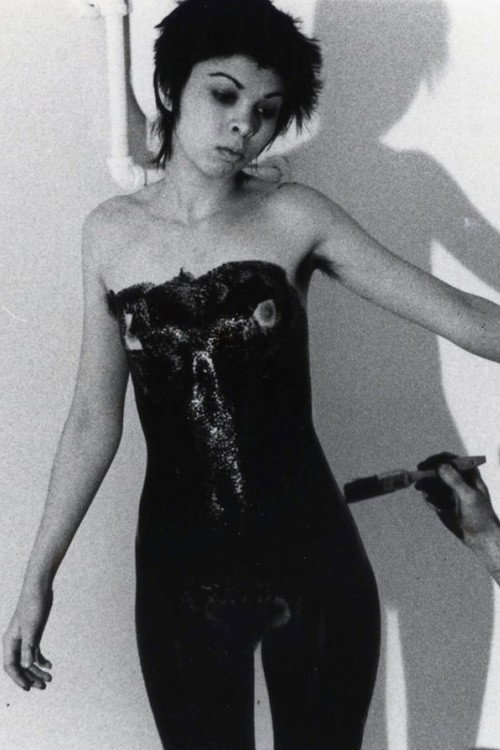
Applying and Removing 1979
Martha Davis' *Applying and Removing* (1979) is a daring and meditative short film that transforms a single subject—an unclothed woman—through a stark ritual of color and reversal.
Director: Martha Davis
Frequently Asked Questions
What is Applying and Removing (1979) about?
The film follows a nude woman undergoing a two-part ritual: first, she is meticulously painted black, then later washes the pigment away in a bathtub, returning to her natural state. The process becomes a metaphor for change, reversal, and the fluidity of identity.
Who directed Applying and Removing?
The film was directed by Martha Davis, a figure known for her bold and experimental approach to visual storytelling.
Who stars in Applying and Removing?
The cast details for *Applying and Removing* (1979) are not publicly available.
Is Applying and Removing (1979) worth watching?
While unconventional, *Applying and Removing* offers a unique cinematic experience for fans of avant-garde or minimalist films. Its brevity and abstract nature make it more of an artistic statement than a traditional narrative, but its themes resonate on multiple levels.
How long is Applying and Removing?
The runtime of *Applying and Removing* (1979) is 18 minutes.
About Applying and Removing (1979) — A Minimalist Masterpiece of Transformation
Martha Davis' *Applying and Removing* (1979) is a daring and meditative short film that transforms a single subject—an unclothed woman—through a stark ritual of color and reversal. The first half immerses viewers in a slow, ritualistic process as she is painted black, each brushstroke heightening the tension between presence and erasure. The second half unravels this transformation as she washes away the pigment in a bathtub, the water swirling with gray as it returns her to a state of raw, unaltered vulnerability.
This 18-minute experimental piece defies easy categorization, weaving themes of identity, perception, and impermanence into a visually hypnotic experience. Stripped of narrative, it invites audiences to project their own meanings onto the act of becoming and unbecoming, leaving a haunting impression long after the final frame. Whether seen as a study in contrast, a commentary on societal constructs, or simply a bold artistic statement, *Applying and Removing* lingers in the mind as a testament to the power of minimalism.