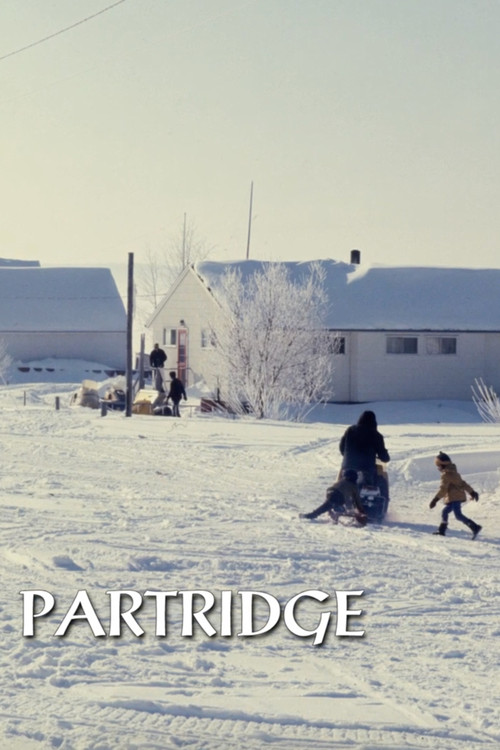
Partridge 1972
In the short documentary Partridge (1972), legendary filmmaker Alanis Obomsawin captures a poignant slice of Indigenous life through the eyes of François Néwashish, a young Atikamekw man from the Manawan community.
Director: Alanis Obomsawin
Frequently Asked Questions
What is Partridge (1972) about?
This short documentary follows François Néwashish, an Atikamekw man from Manawan, as he reflects on his childhood experiences avoiding residential school. His story centers on a hunting trip with his father, where the spirit of a partridge serves as a protective force for children.
Who directed Partridge?
Partridge (1972) was directed by Alanis Obomsawin, an acclaimed filmmaker known for her powerful documentaries exploring Indigenous issues and cultures.
Who stars in Partridge?
The film features François Néwashish as the central figure, with additional presence from his family members during the hunting scenes.
Is Partridge (1972) worth watching?
While Partridge is a brief short film, its themes of cultural preservation and family bonds make it a meaningful watch for fans of Indigenous cinema. As a documentary, it offers a rare glimpse into Atikamekw traditions and the resilience of its people.
How long is Partridge?
Partridge (1972) is a very short film, running just 2 minutes.
About Partridge (1972) — A tender Indigenous short film about family and tradition
In the short documentary Partridge (1972), legendary filmmaker Alanis Obomsawin captures a poignant slice of Indigenous life through the eyes of François Néwashish, a young Atikamekw man from the Manawan community. Unlike his siblings, Néwashish avoided the trauma of residential school, and his memories unfold as a tender reflection on tradition and protection.
The film weaves a quiet yet powerful story of a hunting trip with his father, where the presence of a partridge becomes a symbol of ancestral guidance and safety for children. Through Obomsawin's sensitive lens, Partridge (1972) becomes more than a documentary—it's a celebration of cultural resilience, framed by the natural world and the unspoken bonds between generations.