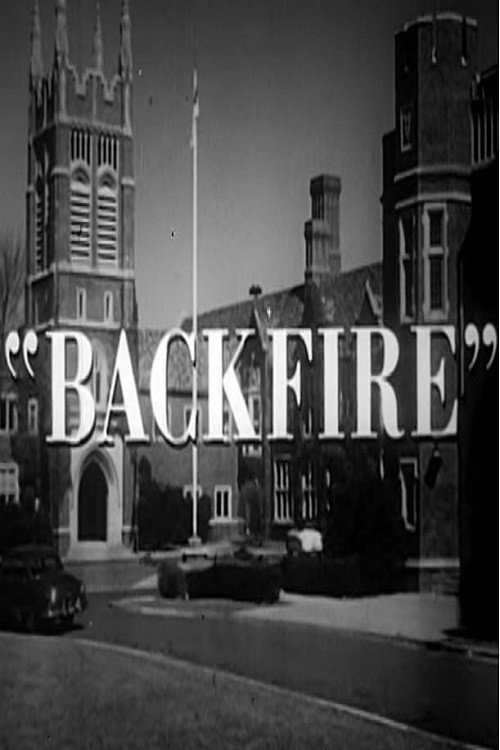
Backfire 1952
Dive into the intriguing 1952 short film *Backfire*, a thought-provoking 15-minute exploration of economic philosophy and reward systems.
Frequently Asked Questions
What is Backfire (1952) about?
*Backfire* tackles a fundamental economic question: Should people be paid based on their effort, or does a more communal system—where needs dictate rewards—better serve society? The film contrasts individual ambition with the Marxist ideal of collective contribution, framed as a stark, concise dialogue.
Who directed Backfire?
Director information is not available.
Who stars in Backfire?
Cast details are not listed for this 1952 short film.
Is Backfire (1952) worth watching?
With its unrated status and obscure production details, *Backfire* is a niche watch best suited for fans of vintage philosophical debates. Its brevity and thematic depth offer food for thought, though it lacks the polish or star power of mainstream cinema. If you enjoy Cold War-era ideological cinema, it's a hidden gem worth tracking down.
How long is Backfire?
The runtime for *Backfire* is exactly 15 minutes.
About Backfire (1952) — A 15-Minute Debate on Work, Reward, and Marxist Ideals
Dive into the intriguing 1952 short film *Backfire*, a thought-provoking 15-minute exploration of economic philosophy and reward systems. This Cold War-era documentary-style gem questions whether hard work should be compensated based on effort or if a more equitable distribution aligns with Karl Marx's famous principle: "From each according to his ability, to each according to his need." The film navigates these ideas with a contemplative, almost scholarly atmosphere, challenging viewers to reconsider societal structures. While the director and cast remain uncredited, the film's concise runtime and sharp thematic focus make it a fascinating footnote in mid-century cinema.
Though modest in length, *Backfire (1952)* packs a punch with its bold inquiry into fairness and labor, blending ideological debate with cinematic simplicity. Its black-and-white presentation and straightforward approach evoke a bygone era of instructional filmmaking, where ideas took precedence over spectacle. For history buffs and philosophy enthusiasts, this obscure short offers a compelling snapshot of 1950s intellectual discourse.