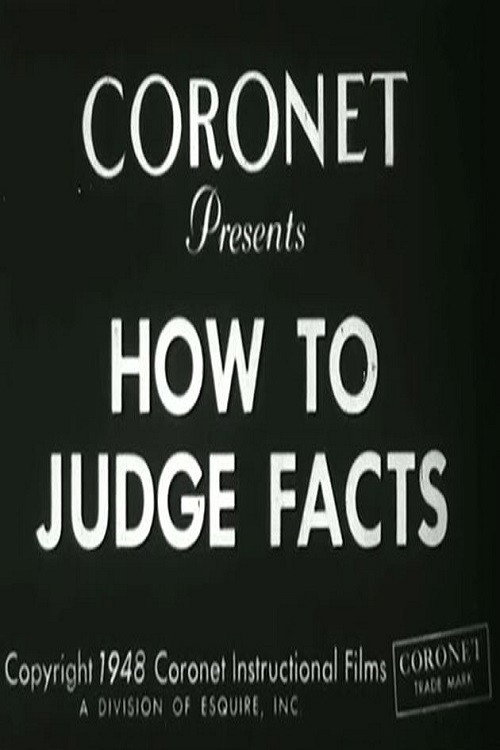
How To Judge Facts 1948
In the 1948 educational short *How To Judge Facts*, a high school football team's funding crisis sparks an unexpected battle over a new film projector, threatening to ignite a full-blown war between jocks and the A/V club.
Frequently Asked Questions
What is *How To Judge Facts* (1948) about?
This 10-minute educational short dives into a high school conflict where funds for a football team's equipment are diverted to buy a film projector. The drama unfolds as a student journalist's sensational article nearly derails efforts to teach critical thinking about facts and assumptions.
Who directed *How To Judge Facts*?
Director information is not available.
Who stars in *How To Judge Facts*?
The cast details are not listed, but the protagonist is Jim, a high school sophomore journalist whose story drives the plot.
Is *How To Judge Facts* (1948) worth watching?
Though unrated on IMDb, this 10-minute short offers a charming snapshot of 1940s school life and media ethics. Fans of vintage educational films or lighthearted schoolyard conflicts may find its themes of critical thinking surprisingly engaging.
How long is *How To Judge Facts*?
The runtime is 10 minutes.
About How To Judge Facts (1948) — A 1940s Schoolyard Drama About Fact-Finding Gone Wrong
In the 1948 educational short *How To Judge Facts*, a high school football team's funding crisis sparks an unexpected battle over a new film projector, threatening to ignite a full-blown war between jocks and the A/V club.
The story follows Jim, a sharp but impulsive sophomore journalist whose sensational newspaper piece nearly derails the school's efforts to foster critical thinking. As he grapples with the dangers of assumptions, false analogies, and misleading platitudes, Jim learns firsthand how easy it is to misjudge the facts—lessons that resonate far beyond the football field. With its breezy yet thoughtful tone, this vintage short blends the tension of adolescent rivalries with a subtle lesson in media literacy, making it a fascinating time capsule of mid-century school life and journalistic ethics.