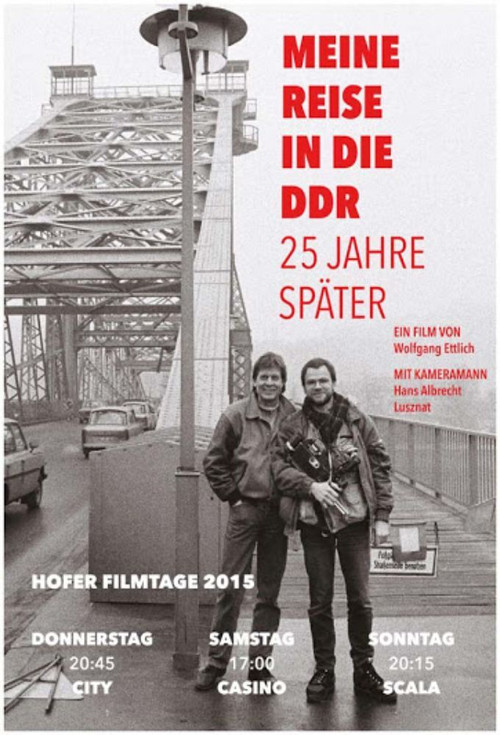
Meine Reise in die DDR - 25 Jahre später 2015
Director Wolfgang Ettlich's *Meine Reise in die DDR – 25 Jahre später* (2015) revisits a pivotal moment in history through a compelling time-travel documentary.
Director: Wolfgang Ettlich
Frequently Asked Questions
What is Meine Reise in die DDR - 25 Jahre später (2015) about?
This documentary follows a journalist and his cameraman as they return to East Germany 25 years after their original 1990 journey, right after the fall of the Berlin Wall. The film contrasts archival footage with present-day visits to former interview subjects, revealing how cities, industries, and lives have transformed—or remained eerily unchanged.
Who directed Meine Reise in die DDR - 25 Jahre später?
Director information is not available.
Who stars in Meine Reise in die DDR - 25 Jahre später?
The documentary features a journalist (unnamed) and a cameraman (unnamed), alongside the real-life subjects they interviewed in 1990.
Is Meine Reise in die DDR - 25 Jahre später (2015) worth watching?
As a historical documentary, it offers a unique and intimate perspective on a transformative era in European history. While it may not have a commercial rating, its thoughtful approach to time, memory, and political change makes it a standout for documentary enthusiasts and history buffs alike.
How long is Meine Reise in die DDR - 25 Jahre später?
The runtime of Meine Reise in die DDR - 25 Jahre später is 85 minutes.
About Meine Reise in die DDR - 25 Jahre später (2015) — A Time-Travel Documentary on the Fall of the GDR
Director Wolfgang Ettlich's *Meine Reise in die DDR – 25 Jahre später* (2015) revisits a pivotal moment in history through a compelling time-travel documentary. Twenty-five years after documenting the fall of the Berlin Wall, a journalist and his cameraman return to East Germany in 2015 to capture the stark contrast between 1990's post-reunification chaos and the modern landscape. Blending archival footage with present-day interviews, the film contrasts the surreal remnants of the GDR—abandoned factories, quiet streetscapes, and forgotten neighborhoods—with the lives of those who once stood in front of the camera. The result is a haunting yet poetic reflection on political upheaval, societal transformation, and the passage of time.
With an atmospheric, almost dreamlike quality, Ettlich's documentary immerses viewers in a world where ideology has faded but its physical echoes linger. The juxtaposition of past and present serves as a poignant reminder of how quickly landscapes—and lives—can change under shifting regimes. For fans of historical documentaries, this film offers a rare glimpse into the personal stories behind monumental events, making it both an educational experience and a deeply human story of resilience and adaptation.