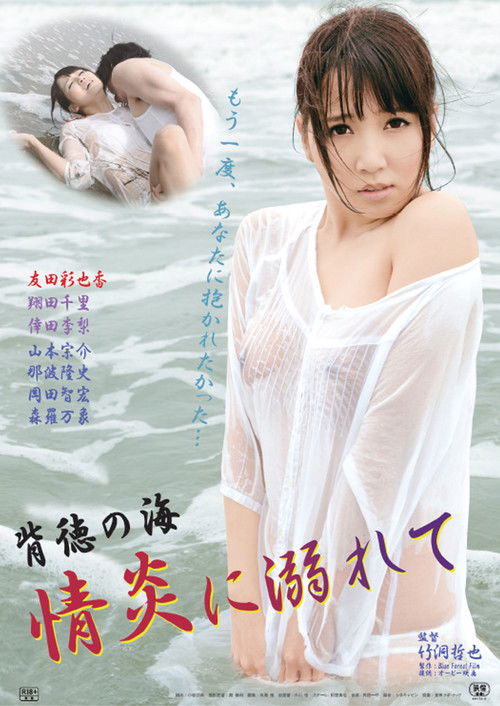
Haitoku no umi: Jōen ni oborete 2014
Set against the stark backdrop of a once-thriving fishing village now choked by industrial progress, *Haitoku no umi: Jōen ni oborete* (2014) weaves a haunting drama under director Tetsuya Takehora's sensitive lens.
Director: Tetsuya Takehora
Cast






Frequently Asked Questions
What is Haitoku no umi: Jōen ni oborete (2014) about?
This 2014 Japanese drama examines the slow erosion of a coastal fishing community swallowed by industrialization. The story follows Natsuyo, a woman navigating a landscape of quiet despair, whose unexpected encounter with a stranger forces her to confront past and present wounds.
Who directed Haitoku no umi: Jōen ni oborete?
Haitoku no umi: Jōen ni oborete was directed by Tetsuya Takehora, known for his evocative storytelling and nuanced character-driven dramas.
Who stars in Haitoku no umi: Jōen ni oborete?
The film features Ayaka Tomoda, Chisato Shoda, Riri Kouda, Sousuke Yamamoto, and Tomohiro Okada in pivotal roles.
Is Haitoku no umi: Jōen ni oborete (2014) worth watching?
While not rated on IMDb, its slow-burn drama and thematic depth make it compelling for fans of atmospheric, character-focused storytelling. The film's restrained intensity rewards viewers seeking thoughtful, unconventional narratives over mainstream appeal.
How long is Haitoku no umi: Jōen ni oborete?
Haitoku no umi: Jōen ni oborete has a runtime of 60 minutes.
Haitoku no umi: Jōen ni oborete (2014) — A Drama of Silence and Industrial Ruin
Set against the stark backdrop of a once-thriving fishing village now choked by industrial progress, *Haitoku no umi: Jōen ni oborete* (2014) weaves a haunting drama under director Tetsuya Takehora's sensitive lens. The film traces the quiet devastation wrought by unchecked factory expansion, where the community's spirit is as polluted as the shoreline. At its core, it explores the fractured relationships between land and people, memory and oblivion, as witnessed through the eyes of Natsuyo—a woman caught in a cycle of violence and unexpected connection. The atmosphere lingers in shades of melancholy and reflection, punctuated by raw emotional confrontations that refuse to be silenced.
The narrative unfolds with a deliberate, dreamlike rhythm, as Natsuyo's encounter with the mysterious Naoya becomes a conduit for themes of displacement and fleeting redemption. Their uneasy bond mirrors the tension between tradition and modernity, power and submission, all framed within the isolated decay of a once-lively harbor. Takehora's direction eschews sensationalism for a raw, introspective gaze, leaving audiences to ponder the lingering scars of progress and the fragile threads that bind human hearts in fractured spaces.