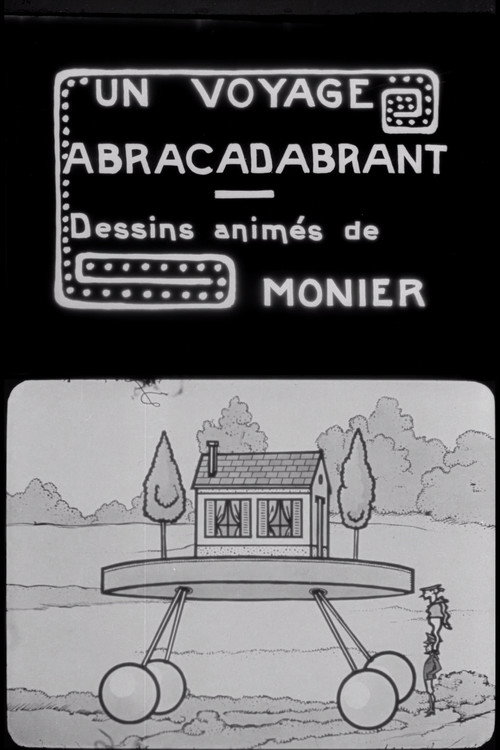
The Fantastic Voyage 1919
In 1919, French animation pioneer Henri Monier crafted a whimsical one-minute short that feels like a playful postcard from the dawn of cinema.
Director: Henri Monier
Frequently Asked Questions
What is The Fantastic Voyage (1919) about?
Two friends, Vendebout and Courandair, build a flying house that transports them to a desert landscape almost instantaneously. Their speedy adventure plays out in under a minute, showcasing the playful side of early animation.
Who directed The Fantastic Voyage?
Henri Monier directed this short film, marking one of his early contributions to the world of animation.
Who stars in The Fantastic Voyage?
The main characters are Vendebout and Courandair, though their roles are more conceptual than performed.
Is The Fantastic Voyage (1919) worth watching?
As a one-minute curiosity from animation's infancy, it's more interesting for film historians than casual viewers. Its historical value lies in its experimental spirit and Monier's inventive approach, though modern audiences may find its brevity more charming than compelling.
How long is The Fantastic Voyage?
The runtime is just 1 minute.
About The Fantastic Voyage (1919) — France's Forgotten Flight of Early Animation
In 1919, French animation pioneer Henri Monier crafted a whimsical one-minute short that feels like a playful postcard from the dawn of cinema. *The Fantastic Voyage* follows two eccentric protagonists, Vendebout and Courandair, whose homemade flying contraption whisks them away to a sun-scorched desert in a blink. Their impromptu journey transforms a simple tale of invention into a surreal daydream, blending early animation's charm with the spirit of Jules Verne's globetrotting fantasies. The film's minimal runtime belies its clever wordplay—names that double as puns on wind and drafts—while the breezy narrative captures the joy of unexpected escapism.
This slice-of-early-20th-century-life predates sound in cinema yet speaks volumes through visual wit. The desert setting, rendered in monochrome linework, feels both vast and intimate, mirroring the film's fleeting yet vivid adventure. Monier's experiment in animation, though brief, reflects the era's fascination with progress and the unknown, wrapped in a package that's equal parts quirky and charming.