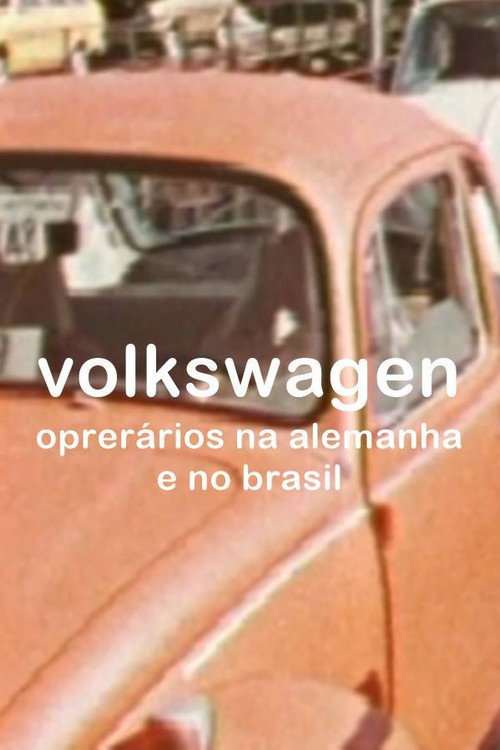
Industriearbeiter in Deutschland – Industriearbeiter in Brasilien 1974
Jorge Bodanzky's *Industriearbeiter in Deutschland – Industriearbeiter in Brasilien (1974)* offers a fascinating glimpse into the lives of Volkswagen workers on opposite sides of the globe.
Director: Jorge Bodanzky
Frequently Asked Questions
What is *Industriearbeiter in Deutschland – Industriearbeiter in Brasilien (1974)* about?
This documentary contrasts the daily lives of two Volkswagen workers—one in Germany and one in Brazil—as they assemble the VW Beetle. Director Jorge Bodanzky highlights the shared struggles of industrial labor against the backdrop of contrasting economic realities.
Who directed *Industriearbeiter in Deutschland – Industriearbeiter in Brasilien*?
Jorge Bodanzky, a Brazilian filmmaker known for his socially conscious documentaries, helmed this eye-opening project.
Who stars in *Industriearbeiter in Deutschland – Industriearbeiter in Brasilien*?
The film focuses on two Volkswagen assembly line workers, whose identities are not prominently listed in available records.
Is *Industriearbeiter in Deutschland – Industriearbeiter in Brasilien (1974)* worth watching?
While unrated and niche, this 25-minute documentary offers a unique perspective on labor and globalization. Its historical value and thoughtful direction make it a rewarding watch for documentary fans, though its brevity may limit its appeal to casual viewers.
How long is *Industriearbeiter in Deutschland – Industriearbeiter in Brasilien*?
The film runs for 25 minutes.
About Industriearbeiter in Deutschland – Industriearbeiter in Brasilien (1974) — A Global Snapshot of VW Workers' Lives
Jorge Bodanzky's *Industriearbeiter in Deutschland – Industriearbeiter in Brasilien (1974)* offers a fascinating glimpse into the lives of Volkswagen workers on opposite sides of the globe. This 25-minute documentary draws a striking parallel between two assembly line workers—one in Germany, the other in Brazil—both tasked with building the iconic VW Beetle. Through their daily routines, the film explores the universal struggles of industrial labor, from monotonous tasks to the shared humanity behind mass production. The stark contrast in their surroundings—Europe's industrial might versus Latin America's emerging economy—adds depth to this snapshot of mid-20th-century work culture, making it a compelling study of globalization before the term was commonplace.
Bodanzky's lens captures the rhythm of factory life, blending raw realism with quiet introspection. The documentary's brevity belies its rich themes: class, labor rights, and the human cost of economic progress. Shot in stark black-and-white, the film's atmosphere mirrors the mechanical precision of the assembly line, yet the workers' weary yet determined expressions reveal the emotional toll of routine. A hidden gem for documentary enthusiasts and social historians alike, *Industriearbeiter in Deutschland – Industriearbeiter in Brasilien* remains a poignant time capsule of industrialization's global reach.