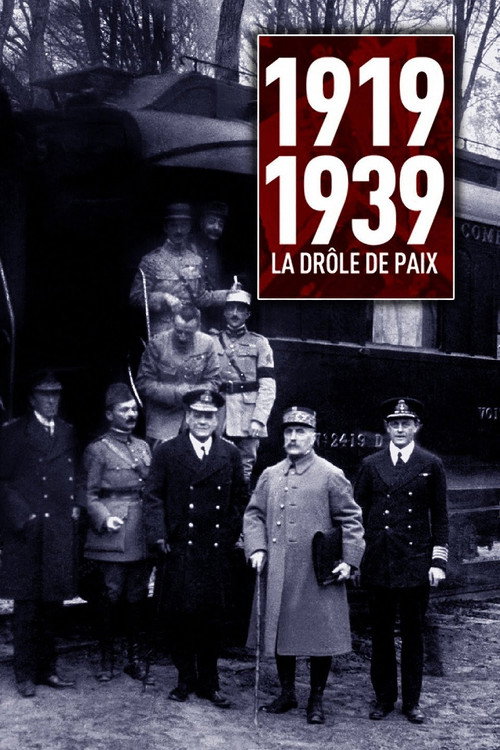
1919-1939 : la drôle de paix 2009
David Korn-Brzoza's 2009 documentary *1919-1939 : la drôle de paix* peels back the layers of a fragile peace that crumbled all too soon after the First World War.
Director: David Korn-Brzoza
Cast

Frequently Asked Questions
What is 1919-1939 : la drôle de paix (2009) about?
This documentary explores the turbulent interwar period in Europe, from the aftermath of World War I to the eve of World War II. It examines how political and social upheavals—rising extremism, economic instability, and failed diplomacy—set the stage for another global conflict, blending historical analysis with poignant reflections on lost hope.
Who directed 1919-1939 : la drôle de paix?
David Korn-Brzoza is the director behind *1919-1939 : la drôle de paix*, crafting a meticulously researched account of Europe's descent into chaos during the 1920s and 1930s.
Who stars in 1919-1939 : la drôle de paix?
The film features the voice talents of Philippe Torreton, whose compelling narration anchors the documentary.
Is 1919-1939 : la drôle de paix (2009) worth watching?
For history enthusiasts and anyone interested in the roots of WWII, this documentary is a must-watch. Its thoughtful approach and strong narrative make it a standout in the genre, offering fresh perspectives on a pivotal era in 20th-century history.
How long is 1919-1939 : la drôle de paix?
Runtime details are not listed.
About 1919-1939 : la drôle de paix (2009) — How Europe's peace collapsed into war
David Korn-Brzoza's 2009 documentary *1919-1939 : la drôle de paix* peels back the layers of a fragile peace that crumbled all too soon after the First World War. Narrated with gravitas by Philippe Torreton, the film charts the two decades between the signing of the Treaty of Versailles and the outbreak of the Second World War, revealing how Europe's fragile optimism curdled into political extremism, economic collapse, and ultimately another global catastrophe. Through archival footage and sharp commentary, Korn-Brzoza captures the tension between hope and despair, portraying a continent teetering on the brink of chaos.
The atmosphere is one of quiet foreboding, as the film traces the rise of fascism and the slow erosion of democratic ideals. It's a historical deep-dive that asks hard questions about collective memory and the cyclical nature of conflict, making it essential viewing for anyone seeking to understand the forces that shaped the modern world.