Léo 2020
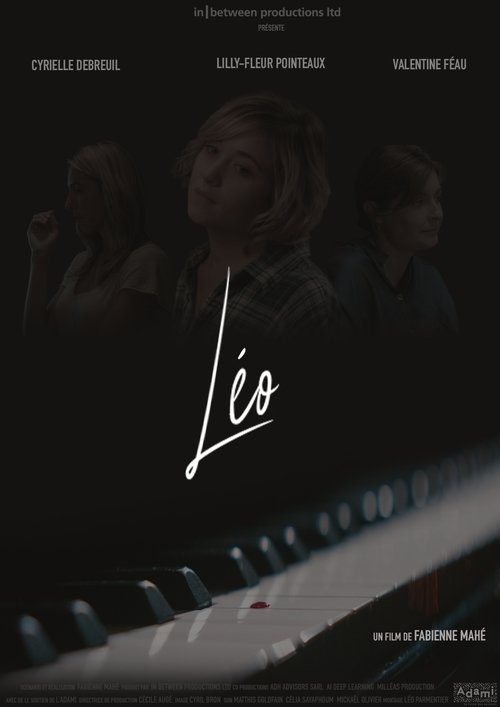
In this intimate 30-minute drama, director Fabienne Mahé invites viewers into the life of Léo, a woman whose carefully arranged Sunday dinner tradition hides a storm of unspoken emotions.
Director: Fabienne Mahé
Cast




Frequently Asked Questions
What is Léo (2020) about?
Léo (2020) follows a woman preparing for her weekly dinner with her sisters, but beneath the familiar routine lies a secret she's struggling to confess. The film captures the tension of a moment on the verge of collapse, where honesty could either heal or destroy fragile bonds.
Who directed Léo?
Léo was directed by Fabienne Mahé, who crafts a deeply atmospheric and emotionally charged narrative within the film's brief runtime.
Who stars in Léo?
The film features Lilly-Fleur Pointeaux as Léo, alongside Cyrielle Debreuil, Valentine Feau, Marie Boissard, and Joffrey Platel in pivotal roles.
Is Léo (2020) worth watching?
Léo (2020) is a standout choice for those who appreciate slow-burn dramas with emotional depth. Despite its short runtime, it delivers a powerful punch, making it a compelling watch for fans of intimate, character-driven storytelling.
How long is Léo?
Léo has a runtime of 30 minutes.
About Léo (2020): A Secret Too Heavy for Sunday Dinner — Full Movie Info
In this intimate 30-minute drama, director Fabienne Mahé invites viewers into the life of Léo, a woman whose carefully arranged Sunday dinner tradition hides a storm of unspoken emotions. As her two sisters gather around the table, Léo's cheerful demeanor barely masks the weight of a secret she's desperate to share, but can't quite bring herself to reveal. The film thrives on quiet tension, where every glance and hesitant pause speaks volumes about family dynamics and the fragility of honesty. With a minimalist approach, Léo (2020) explores themes of guilt, vulnerability, and the quiet fractures within sibling bonds. The intimate setting and restrained performances create an atmosphere of suspense, making it a compelling watch for fans of character-driven dramas.
Léo (2020) stands out for its raw, understated storytelling, focusing on the emotional ripple effects of a secret that lingers between generations. The film's brevity is its strength, delivering a powerful punch in a compact runtime. Mahé's direction ensures that every detail—from the clinking of glasses to the unspoken glances—contributes to the film's hauntingly real atmosphere. It's a story that lingers long after the credits roll, leaving audiences to ponder the secrets we keep and the ones we're too afraid to let go.