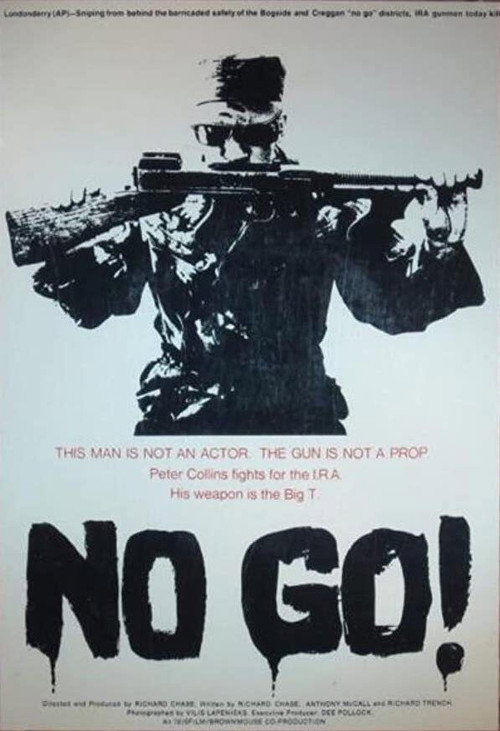
No Go! 1973
"This man is not an actor. This gun is not a prop."
Richard Chase's *No Go! (1973)* dives into the raw tensions of Northern Ireland's Bogside and Creegan districts, painting a stark portrait of a community pushed to its limits.
Director: Richard Chase
Frequently Asked Questions
What is No Go! (1973) about?
*No Go!* explores the turbulent history of Northern Ireland's Bogside and Creegan areas, focusing on the rise of the IRA. The film contrasts the Provisional IRA's armed resistance with the Official IRA's Marxist ideology, all while examining the legacy of British partitioning in the 1920s.
Who directed No Go!?
The film was directed by Richard Chase, whose work in this documentary brings a visceral, unfiltered perspective to the IRA's struggles.
Who stars in No Go!?
Cast details for *No Go!* are not publicly listed.
Is No Go! (1973) worth watching?
As an unrated documentary, *No Go!* offers a rare and unfiltered look at a pivotal moment in Irish history. Its stark portrayal of political and social upheaval makes it a compelling choice for fans of historical docudramas.
How long is No Go!?
*No Go!* runs for 82 minutes.
About No Go! (1973) — A Raw Docudrama of IRA Struggles in Northern Ireland
Richard Chase's *No Go! (1973)* dives into the raw tensions of Northern Ireland's Bogside and Creegan districts, painting a stark portrait of a community pushed to its limits. This gripping docudrama traces the roots of the IRA's rise, beginning with the 1920s British partitioning of Ireland—a decision that stripped Catholic minorities of their rights. The film contrasts the Provisional IRA's call for armed rebellion with the Marxist leanings of the Official faction, all set against a backdrop of civil unrest. Chase crafts an atmosphere of urgency and frustration, capturing the pulse of a time when political ideals clashed violently with reality.
With its unflinching gaze and provocative commentary, *No Go!* doesn't just document history—it immerses viewers in the lived experience of a people fighting for self-determination. The documentary's no-holds-barred approach makes it a compelling watch for anyone interested in the complexities of Irish independence movements and the human stories behind the headlines.