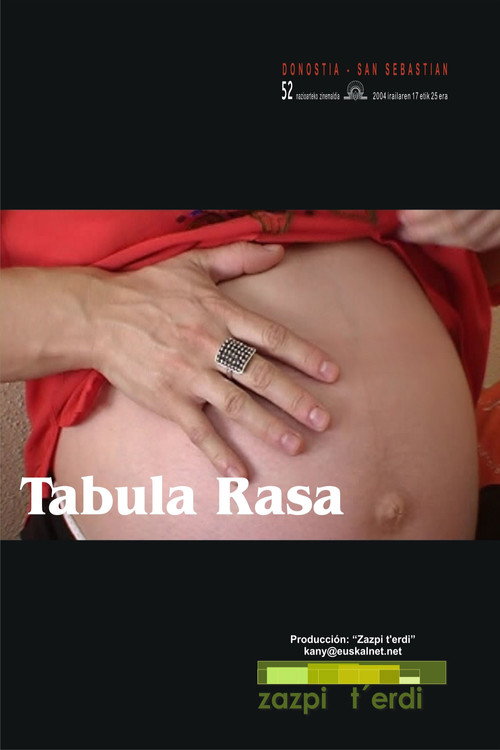
Tabula rasa 2004
Dive into the intriguing world of *Tabula rasa (2004)*, a compelling documentary by Juan Miguel Gutiérrez that explores the humble but fascinating origins of writing.
Director: Juan Miguel Gutiérrez
Frequently Asked Questions
What is Tabula rasa (2004) about?
*Tabula rasa (2004)* delves into the history of ancient Greek wax tablets, the 'tabulas,' which served as early writing surfaces. The documentary illustrates how these tablets, when unused, were called 'tabula rasa'—blank slates that symbolized untapped potential and the beginning of knowledge.
Who directed Tabula rasa?
The film was directed by Juan Miguel Gutiérrez, a filmmaker whose work often explores historical and cultural themes through a documentary lens.
Who stars in Tabula rasa?
Cast details for *Tabula rasa (2004)* are not publicly listed.
Is Tabula rasa (2004) worth watching?
As a short but thought-provoking documentary, *Tabula rasa (2004)* offers a unique perspective on ancient history and the evolution of writing. Its concise runtime and atmospheric tone make it ideal for viewers interested in historical documentaries, though it may lack mainstream appeal due to its niche subject.
How long is Tabula rasa?
*Tabula rasa (2004)* has a runtime of 59 minutes.
About Tabula rasa (2004) — A Documentary on Ancient Greek Writing Tablets and Their Legacy
Dive into the intriguing world of *Tabula rasa (2004)*, a compelling documentary by Juan Miguel Gutiérrez that explores the humble but fascinating origins of writing. The film traces the story of ancient Greek wooden writing tablets, known as 'tabulas,' which were coated in liquid wax and engraved with a stylus. When unused, these pristine tablets were called 'tabula rasa,' or blank slates—a metaphor that has transcended centuries to symbolize potential, emptiness, and the blank canvas of human knowledge.
Through Gutiérrez's lens, *Tabula rasa (2004)* transforms a simple historical artifact into a meditation on beginnings and the uncharted territories of human thought. The documentary's atmospheric tone blends historical curiosity with philosophical reflection, making it a captivating watch for enthusiasts of both history and cinema. With its concise 59-minute runtime, this film offers a concise yet enriching exploration of how something as basic as a wax tablet could shape the future of written communication.