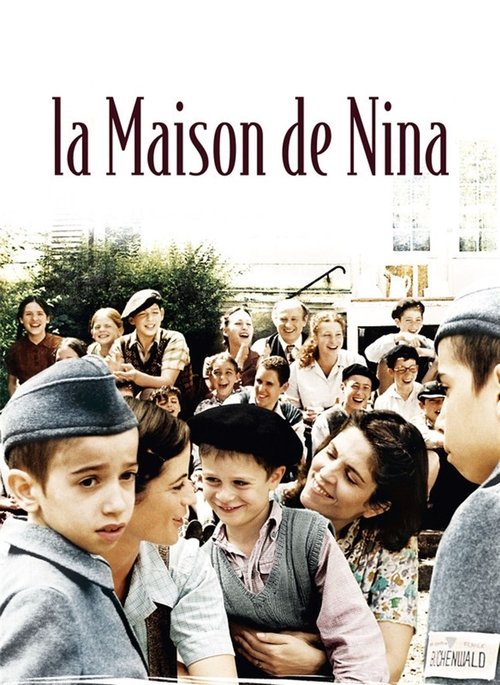
Nina's House 2005
Richard Dembo's *Nina's House* (2005) unfolds against the fragile hope of post-war France, between 1944 and 1946, in a chateau-turned-orphanage on the outskirts of Paris.
Director: Richard Dembo
Cast








Frequently Asked Questions
What is Nina's House (2005) about?
*Nina's House* follows a group of war orphans sheltered in a Parisian chateau just after the Liberation, where Nina, their caretaker, struggles to preserve a sense of normalcy amid scarcity and uncertainty. As the harsh realities of the Holocaust begin to surface, the film explores how these children grapple with grief, memory, and the fragile threads of hope in a fractured world.
Who directed Nina's House?
Nina's House was directed by Richard Dembo, a filmmaker known for his sensitive portrayal of human resilience in the face of historical trauma.
Who stars in Nina's House?
The film stars Agnès Jaoui, Sarah Adler, Katia Lewkowicz, Arié Elmaleh, and Sébastien Knafo in lead roles.
Is Nina's House (2005) worth watching?
While it doesn't carry an IMDb rating, *Nina's House* stands out as a thoughtful and emotionally grounded drama about post-war healing. Its focus on historical trauma and human connection makes it a compelling watch for fans of war-era films and character-driven narratives.
How long is Nina's House?
Nina's House runs for 112 minutes.
About Nina's House (2005) — Post-War Orphanage Drama of Resilience and Loss
Richard Dembo's *Nina's House* (2005) unfolds against the fragile hope of post-war France, between 1944 and 1946, in a chateau-turned-orphanage on the outskirts of Paris. Directed by Dembo, the film centers on Nina, a resilient caretaker tending to a group of French Jewish children whose parents have likely perished in the Holocaust. The narrative captures a moment of quiet resilience, where scarcity of food and the absence of horrific news from concentration camps create an eerie calm—one that will soon shatter with the revelation of what has truly happened to their families.
The story navigates themes of survival, loss, and the fragile bonds that form in the wake of devastation. Through the lens of this microcosm of post-Liberation France, Dembo crafts a deeply human drama where childhood innocence collides with the weight of history. The chateau becomes both sanctuary and prison, a setting that mirrors the emotional and physical scars of war.