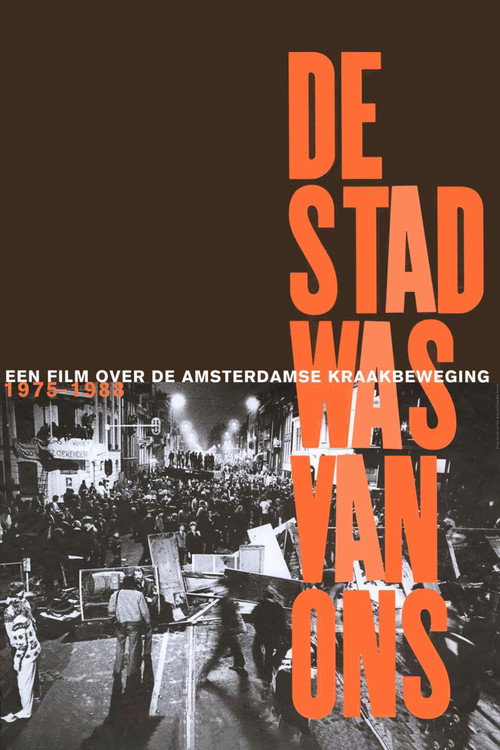
It Was Our City 1996
It Was Our City (1996) delves into the Amsterdam squatters' movement of the 1970s, a time when housing shortages led to an influx of squatters occupying vacant properties.
Director: Joost Seelen
Frequently Asked Questions
What is It Was Our City (1996) about?
The film explores the Amsterdam squatters' movement of the 1970s, a time of housing shortages and social change.
Who directed It Was Our City?
Joost Seelen masterfully directed the documentary, providing a nuanced exploration of the squatters' motivations and the broader social context.
Who stars in It Was Our City?
Unfortunately, the main cast is not available.
Is It Was Our City (1996) worth watching?
While It Was Our City (1996) may not have received a high IMDb rating, its thought-provoking examination of the squatters' movement and its impact on Amsterdam makes it a compelling watch for those interested in social change and collective action.
How long is It Was Our City?
The documentary has a runtime of 93 minutes.
About It Was Our City (1996) — Uncovering the Amsterdam Squatters' Movement
It Was Our City (1996) delves into the Amsterdam squatters' movement of the 1970s, a time when housing shortages led to an influx of squatters occupying vacant properties. The film's portrayal of this tumultuous period, marked by violent outbursts and clashes with authorities, sheds light on the complex interplay of social and economic factors. As the squatters' movement gained momentum, their demands for affordable housing and social change became increasingly politicized, with many viewing the occupation of empty properties as a necessary evil. Director Joost Seelen masterfully weaves together interviews with key figures from the movement, providing a nuanced exploration of the squatters' motivations and the broader social context in which they operated. This gripping documentary offers a thought-provoking examination of the tensions between individual rights and collective action, making it a compelling watch for those interested in the history of social movements and the power of collective action.
With its unflinching portrayal of the squatters' movement and its impact on Amsterdam, It Was Our City (1996) is a must-watch for anyone interested in the complexities of urban politics and the human cost of social change. As the city's residents grappled with the consequences of the housing shortage, the squatters' movement became a powerful symbol of resistance against the status quo, sparking important conversations about the role of government in addressing social inequality.
Through its thoughtful examination of the squatters' movement, It Was Our City (1996) offers a rich and nuanced portrayal of a pivotal moment in Amsterdam's history, one that continues to resonate with audiences today.