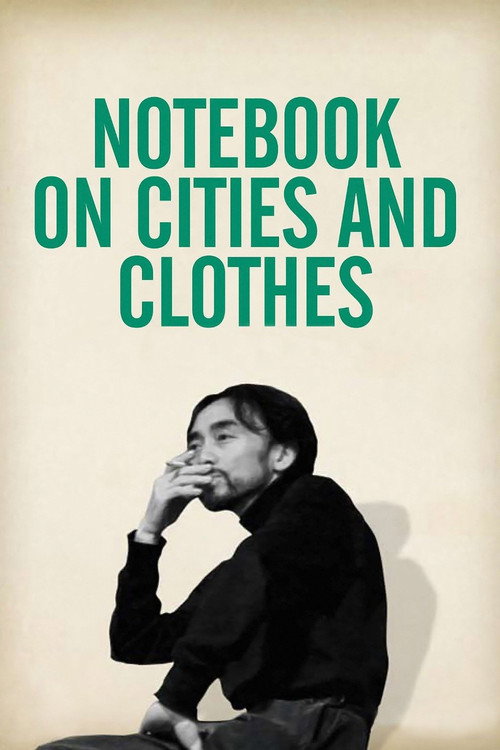
Notebook on Cities and Clothes 1989
Wim Wenders' *Notebook on Cities and Clothes* (1989) is a meditative documentary that blends fashion, urban life, and cinema into a visually rich exploration of identity and creation.
Director: Wim Wenders
Cast


Frequently Asked Questions
What is *Notebook on Cities and Clothes* (1989) about?
*Notebook on Cities and Clothes* follows director Wim Wenders as he engages in a deep conversation with legendary Japanese fashion designer Yohji Yamamoto. Together, they explore the creative process while reflecting on how cities, personal identity, and cinema evolve in an increasingly digital world.
Who directed *Notebook on Cities and Clothes*?
*Notebook on Cities and Clothes* was directed by acclaimed German filmmaker Wim Wenders, known for his visually stunning and thought-provoking works.
Who stars in *Notebook on Cities and Clothes*?
The documentary features director Wim Wenders in conversation with famed Japanese fashion designer Yohji Yamamoto, who shares insights into his creative vision.
Is *Notebook on Cities and Clothes* (1989) worth watching?
As a reflective documentary blending fashion, urban life, and cinema, *Notebook on Cities and Clothes* offers a unique perspective for viewers who appreciate poetic filmmaking. While not a mainstream release, its themes resonate with fans of artistic documentaries and Wenders' signature style.
How long is *Notebook on Cities and Clothes*?
*Notebook on Cities and Clothes* runs for 81 minutes.
🎥 Trailer
About Notebook on Cities and Clothes (1989) — A poetic documentary on fashion, cities, and identity
Wim Wenders' *Notebook on Cities and Clothes* (1989) is a meditative documentary that blends fashion, urban life, and cinema into a visually rich exploration of identity and creation. In this 81-minute film, Wenders sits down with avant-garde Japanese designer Yohji Yamamoto to dissect the creative process, revealing how cities, culture, and personal expression intertwine. Through thoughtful conversations and striking imagery, the documentary captures the tension between tradition and the digital age, offering a poetic reflection on how we shape—and are shaped by—our environments.
Blending philosophy with raw visuals, the film feels like a quiet manifesto for artistic freedom, where fashion becomes a metaphor for the fluidity of human experience. Wenders' signature observational style turns this documentary into a sensory journey, making it essential viewing for fans of thoughtful cinema and those curious about the intersection of art, identity, and urban landscapes.