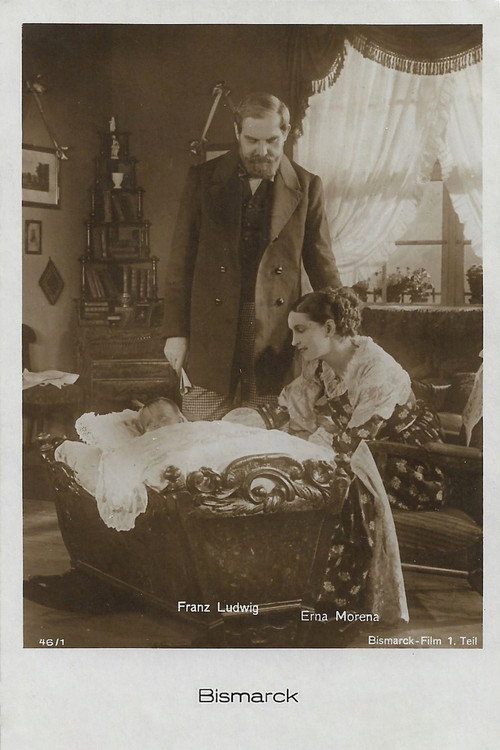
Bismarck, 1. Teil 1925
Step into the dramatic corridors of 19th-century European power in *Bismarck, 1. Teil (1925)*, Ernst Wendt's sweeping historical drama that explores the rise of Otto von Bismarck, the iron-willed architect of German unification.
Director: Ernst Wendt
Cast

Frequently Asked Questions
What is Bismarck, 1. Teil (1925) about?
This silent-era drama follows Otto von Bismarck's early political career as he navigates a web of alliances to unify Germany. The film blends historical events with character-driven tension, showcasing Bismarck's determination and the personal sacrifices behind his monumental achievements.
Who directed Bismarck, 1. Teil?
Ernst Wendt directed *Bismarck, 1. Teil*, bringing a meticulous eye for period detail and dramatic storytelling to this historical saga.
Who stars in Bismarck, 1. Teil?
The film features Franz Ludwig in the lead role as Bismarck, alongside Erna Morena, Adolf Klein, and Leopold von Ledebur in pivotal supporting parts.
Is Bismarck, 1. Teil (1925) worth watching?
As a silent-era historical drama, *Bismarck, 1. Teil* offers a gripping narrative and impressive craftsmanship for its time. While it lacks modern CGI spectacle, its themes of power and ambition still resonate, making it a rewarding watch for fans of classic cinema.
How long is Bismarck, 1. Teil?
Runtime details are not listed for *Bismarck, 1. Teil* (1925).
About Bismarck, 1. Teil (1925) — German History Epic on Power and Legacy
Step into the dramatic corridors of 19th-century European power in *Bismarck, 1. Teil (1925)*, Ernst Wendt's sweeping historical drama that explores the rise of Otto von Bismarck, the iron-willed architect of German unification. This silent-era epic immerses viewers in a world of political intrigue, clashing ambitions, and national transformation, where every decision reverberates across empires. Franz Ludwig delivers a commanding performance as Bismarck, navigating treacherous alliances and ruthless opposition to shape a new Germany, while Erna Morena embodies the era's complex feminine figures caught in the tide of history. Wendt's direction balances grand set pieces with intimate character moments, creating an atmospheric tapestry of ambition, betrayal, and legacy. The film's black-and-white grandeur, punctuated by dramatic lighting and expressive acting, captures the tension of an era on the brink of change.
As a quintessential example of German historical cinema, *Bismarck, 1. Teil* offers more than just a biographical account—it's a meditation on power, idealism, and the personal cost of shaping nations. The story unfolds like a chess match played on the stage of history, where every move could ignite war or forge an empire. Though rooted in carefully researched events, the film thrives on its dramatic narrative, making Bismarck's journey accessible and compelling even for modern audiences. For fans of period dramas and political sagas, this 1925 classic remains a fascinating window into the past, where the echoes of Bismarck's legacy still resonate today.