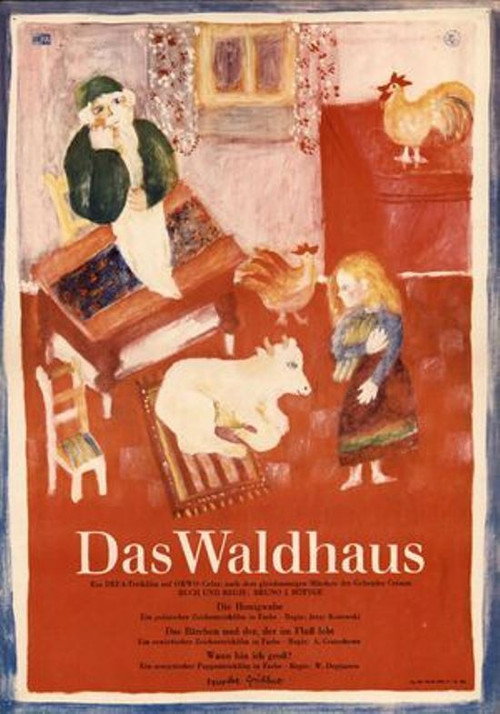
Das Waldhaus 1968
Das Waldhaus (1968), a charming 32-minute animated fairy tale from director Bruno J. Böttge, weaves a story of kindness triumphing over laziness against the backdrop of a mystical forest.
Director: Bruno J. Böttge
Cast
Frequently Asked Questions
What is Das Waldhaus (1968) about?
This animated short tells the story of two sisters, Else and Katrin, whose contrasting personalities shape their fate in a magical forest house. While Katrin's kindness and diligence win the trust of forest creatures, Else's laziness and quarrelsome nature lead to an unexpected twist involving an enchanted prince.
Who directed Das Waldhaus?
Das Waldhaus was directed by Bruno J. Böttge, a filmmaker known for his contributions to mid-20th century European animation.
Who stars in Das Waldhaus?
The film features Ursula Geyer-Hopfe as one of the central characters, alongside the voices of the enchanted forest animals.
Is Das Waldhaus (1968) worth watching?
Though unrated, Das Waldhaus (1968) offers a delightful snapshot of classic animation with a fairy-tale charm. Its themes of kindness and consequence make it a worthwhile watch for fans of nostalgic, family-friendly stories.
How long is Das Waldhaus?
Das Waldhaus has a runtime of 32 minutes.
About Das Waldhaus (1968) — A Short Animated Fairy Tale of Contrast and Magic
Das Waldhaus (1968), a charming 32-minute animated fairy tale from director Bruno J. Böttge, weaves a story of kindness triumphing over laziness against the backdrop of a mystical forest. The tale follows a humble woodcutter and his two daughters—Else, whose quarrelsome nature and indifference push everyone away, and Katrin, whose gentle heart and hard work earn the admiration of both animals and the enchanted forest folk. When a magical forest house and a prince transformed into an ancient man become the center of their adventures, the contrast between the sisters' personalities drives a heartwarming narrative about redemption and second chances.
Böttge's direction infuses the short film with a warm, pastoral atmosphere, blending folklore with subtle moral lessons. The animation's simplicity complements its emotional depth, making it a nostalgic gem for fans of classic European animation.