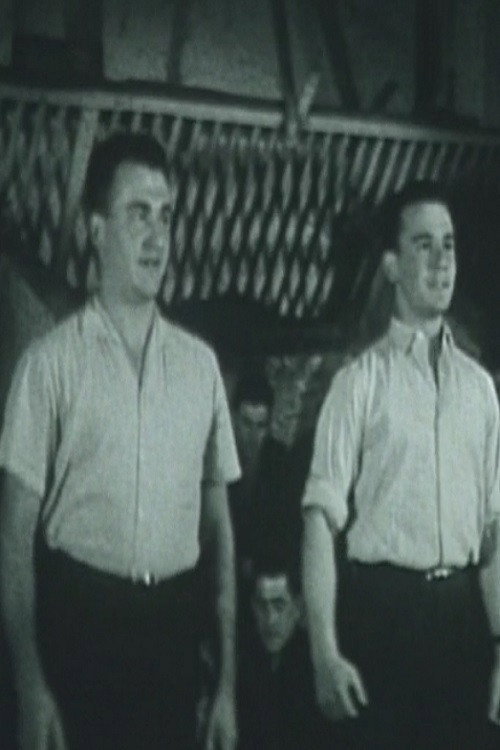
Croquis en Soule 1958
Step into a world where tradition breathes through every straw-strewn step in the 1958 short film Croquis en Soule.
Director: Hubert Knapp
Frequently Asked Questions
What is Croquis en Soule (1958) about?
This short film transports viewers to Zuberoa, where shepherds gather at night to rehearse traditional dances on straw in a cow barn. The focus is less on performance and more on the preservation of a rural Basque cultural ritual, captured with a poetic realism.
Who directed Croquis en Soule?
The film was directed by Hubert Knapp, whose work often explored ethnographic and artistic themes.
Who stars in Croquis en Soule?
The cast consists of local shepherds and dancers from Zuberoa, their identities and roles uncredited in the film's documentation.
Is Croquis en Soule (1958) worth watching?
With its 27-minute runtime and unrated status, Croquis en Soule is more of a cultural artifact than a mainstream entertainment piece. It's a unique watch for those interested in folk traditions, ethnographic cinema, or the creative vision of Hubert Knapp.
How long is Croquis en Soule?
The film runs for 27 minutes.
About Croquis en Soule (1958) — A 27-Minute Cinematic Snapshot of Basque Shepherds' Rituals
Step into a world where tradition breathes through every straw-strewn step in the 1958 short film Croquis en Soule. Directed by Hubert Knapp, this evocative 27-minute piece captures the hidden magic of Zuberoa's nocturnal shepherds as they rehearse barefoot dances in the hush of a cow barn. The film doesn't just document a rehearsal; it immerses viewers in a living tableau where rhythm, culture, and the earthy scent of straw intertwine. Knapp's lens transforms a simple pastoral ritual into a cinematic meditation on heritage and time, where every footfall echoes centuries of unspoken stories.
This isn't your typical dance film—it's a fleeting glimpse into the soul of rural Basque identity, shot in monochrome tones that deepen the sense of timelessness. The dancers' movements, stripped of modern interference, feel raw and genuine, as if the camera itself is holding its breath to preserve a moment that might vanish by dawn. For anyone drawn to the intersection of folk art and cinema, Croquis en Soule (1958) offers a quietly powerful experience that lingers long after the final frame.