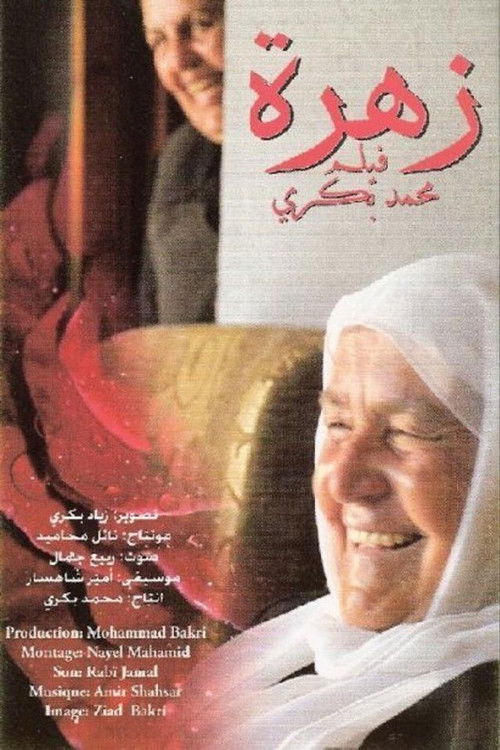
Zahra 2009
Directed by Mohammad Bakri, *Zahra (2009)* is a poignant documentary that weaves the personal and political into a single harrowing narrative.
Director: Mohammad Bakri
Frequently Asked Questions
What is Zahra (2009) about?
Zahra (2009) traces the life of a Palestinian woman from her childhood in al-Bane before the 1948 war through Israel's founding, martial law, and the radical reshaping of Palestinian society. Her personal journey becomes a powerful reflection of collective experience under political transformation.
Who directed Zahra?
Zahra was directed by Mohammad Bakri, an acclaimed Palestinian filmmaker known for blending personal narratives with national history.
Who stars in Zahra?
Zahra features Palestinian woman Zahra as the central figure, with additional perspectives from family and community members whose voices shape the documentary's layered storytelling.
Is Zahra (2009) worth watching?
As a documentary rooted in lived experience, *Zahra (2009)* offers a rare human perspective on pivotal historical events. While it's unrated and may not have mainstream acclaim, its thematic depth and emotional power make it compelling for viewers interested in Palestinian history and personal documentary cinema.
How long is Zahra?
Zahra (2009) runs for 63 minutes.
About Zahra (2009) — A Palestinian Woman's Story Through War and Memory
Directed by Mohammad Bakri, *Zahra (2009)* is a poignant documentary that weaves the personal and political into a single harrowing narrative. Through the life of Palestinian matriarch Zahra, from her childhood in the Galilee village of al-Bane to the seismic shifts of 1948, the film traces the transformation of a society under pressure. From the violent establishment of Israel to decades living under martial law, Zahra's journey becomes a lens into the broader Palestinian experience, capturing both resilience and loss with quiet dignity.
Bakri's camera lingers on intimate recollections and historic turning points, blending archive-like realism with deeply human storytelling. The atmosphere is one of understated urgency, where every household detail and political upheaval feels equally vivid. *Zahra (2009)* isn't just a history lesson—it's a testament to memory preserved against erasure.