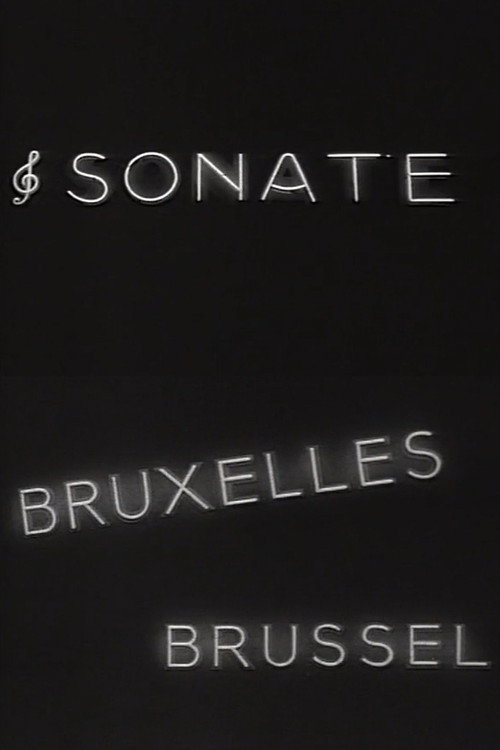
Sonate in Brussel 1955
Emile Degelin's *Sonate in Brussel (1955)* is a concise yet evocative short documentary that captures the pulse of Brussels in the mid-1950s.
Director: Emile Degelin
Frequently Asked Questions
What is Sonate in Brussel (1955) about?
*Sonate in Brussel* presents a visual ode to Brussels, using minimal dialogue to spotlight the city's architecture, daily routines, and understated elegance. The film's title hints at its musical structure, with the camera's movements and editing creating a rhythmic harmony. It's less a story and more an impressionistic portrait of a moment in time.
Who directed Sonate in Brussel?
The film was directed by Emile Degelin, a Belgian filmmaker known for his contributions to documentary cinema and his ability to capture the human spirit through visual storytelling.
Who stars in Sonate in Brussel?
Cast details for *Sonate in Brussel (1955)* are not publicly available, as the film is an observational documentary with no credited lead actors.
Is Sonate in Brussel (1955) worth watching?
*Sonate in Brussel* may not be a blockbuster, but its 16-minute runtime and artistic approach make it a rewarding watch for fans of classic short films and urban documentaries. While IMDb doesn't rate it, its historical and aesthetic value lies in its ability to transport viewers to a different era with effortless charm.
How long is Sonate in Brussel?
The film has a runtime of 16 minutes.
About Sonate in Brussel (1955) — A poetic short film capturing 1950s Brussels
Emile Degelin's *Sonate in Brussel (1955)* is a concise yet evocative short documentary that captures the pulse of Brussels in the mid-1950s. Shot in black-and-white, the film blends observational realism with a poetic touch, transforming everyday streets and squares into a visual sonata of urban life. With its minimal runtime, *Sonate in Brussel* eschews narrative in favor of atmosphere, immersing viewers in the rhythm of the city—its architecture, crowds, and quiet corners—through a lens that feels both nostalgic and timeless. The documentary genre allows Degelin to weave themes of modernity and tradition, framing Brussels as a canvas of fleeting moments and enduring character.
While details about the cast remain elusive, Degelin's direction ensures that the city itself takes center stage, its streets and inhabitants becoming the true protagonists. The 16-minute runtime invites a reflective viewing experience, perfect for those who appreciate cinematic slices of life that linger long after the credits roll. Whether you're a history buff or a cinephile drawn to the art of the short film, *Sonate in Brussel (1955)* offers a compact yet captivating glimpse into post-war Belgium's cultural heartbeat.