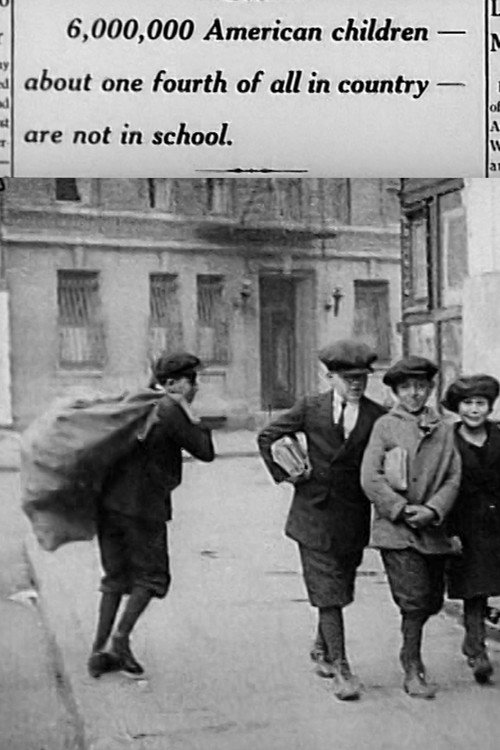
6,000,000 American Children... Are Not in School 1922
This 1922 silent documentary newsreel, *6,000,000 American Children... Are Not in School*, shines a stark light on a forgotten crisis of early 20th-century America. Inspired by Lewis J.
Frequently Asked Questions
What is *6,000,000 American Children... Are Not in School* (1922) about?
This silent documentary newsreel reveals the shocking reality that six million American children were not attending school in 1922, using census data to highlight a critical gap in the nation's education system. It doesn't just present numbers—it frames the absence of these children as a national failure with long-term consequences.
Who directed *6,000,000 American Children... Are Not in School*?
Director information for this 1922 film is not available. The short was inspired by Lewis J. Selznick's census data but produced as a newsreel-style documentary without credited filmmakers.
Who stars in *6,000,000 American Children... Are Not in School*?
Cast information for this silent documentary is not listed. The film relies on factual data and visual storytelling rather than named actors.
Is *6,000,000 American Children... Are Not in School* (1922) worth watching?
While this two-minute silent documentary is more of a historical artifact than a cinematic masterpiece, its subject matter remains strikingly relevant to discussions about education and equity. Film enthusiasts and history buffs may find it a fascinating glimpse into early social reform cinema.
How long is *6,000,000 American Children... Are Not in School*?
The runtime for *6,000,000 American Children... Are Not in School* is listed as 2 minutes.
About 6,000,000 American Children... Are Not in School (1922) — The 2-Minute Documentary That Exposed a Forgotten Crisis
This 1922 silent documentary newsreel, *6,000,000 American Children... Are Not in School*, shines a stark light on a forgotten crisis of early 20th-century America. Inspired by Lewis J. Selznick's census data, the short film exposes the staggering scale of children excluded from education at a time when schooling was increasingly seen as the cornerstone of national progress. Through haunting visuals and unflinching statistics, it frames the absence of six million young voices in classrooms as not just an educational failure but a moral one, challenging viewers to confront the systemic barriers that kept entire generations in the shadows. The film's urgency is palpable, weaving together the raw numbers with the unspoken human cost behind them.
Though brief at just two minutes, *6,000,000 American Children... Are Not in School* packs a punch that resonates with historical weight. It serves as a time capsule of early social reform cinema, blending journalistic grit with the cinematic flair of its era. More than a mere relic, the film invites modern audiences to reflect on parallels in today's education systems, where access and equity remain hotly debated topics. Its brevity belies its ambition—this was more than propaganda; it was a call to action disguised as a reel of news.