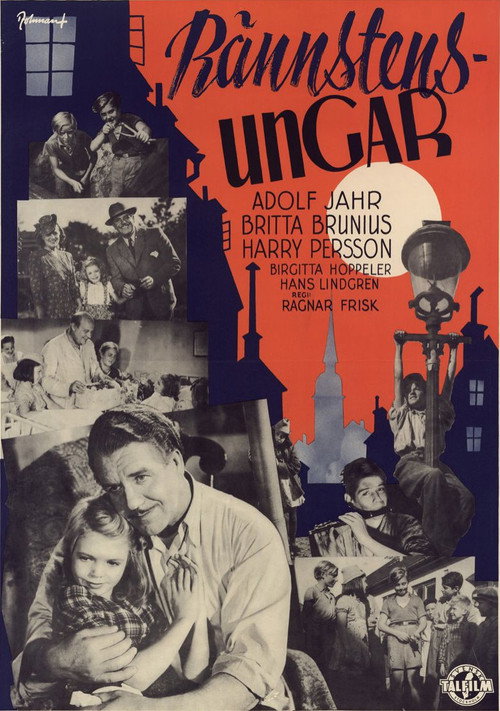
Rannstensungar 1944
In the gritty heart of 1940s Stockholm, *Rannstensungar* (1944) weaves a poignant drama about Ninni, a spirited young woman paralyzed from the waist down after a tragic loss.
Director: Ragnar Frisk
Cast



Frequently Asked Questions
What is Rannstensungar (1944) about?
The film follows Ninni, a young woman left paralyzed and financially stranded after her mother's death. Stranded in Stockholm's slums, she faces both physical confinement and emotional turmoil as she navigates a world that offers little support.
Who directed Rannstensungar?
Ragnar Frisk directed this 1944 Swedish drama, known for his ability to blend social realism with compelling character studies.
Who stars in Rannstensungar?
The film features Adolf Jahr, Britta Brunius, Lillie Wästfeldt, Harry Persson, and Birgitta Hoppeler in key roles.
Is Rannstensungar (1944) worth watching?
While it carries no IMDb rating, the film's emotional depth and historical significance make it a worthwhile watch for fans of classic Swedish cinema. Its themes of resilience and isolation add layers that transcend its era.
How long is Rannstensungar?
The film runs for 98 minutes.
About Rannstensungar (1944) — A Classic Swedish Drama of Resilience and Isolation
In the gritty heart of 1940s Stockholm, *Rannstensungar* (1944) weaves a poignant drama about Ninni, a spirited young woman paralyzed from the waist down after a tragic loss. Left to navigate the city's labyrinthine streets with limited resources, she faces isolation and confinement—both physical and emotional. Directed by Ragnar Frisk, this black-and-white Swedish drama explores themes of resilience and societal barriers through its stark, atmospheric storytelling. With a cast led by Adolf Jahr and Britta Brunius, the film captures the era's quiet desperation while delivering a deeply human narrative. The dimly lit alleys and crowded tenements of Stockholm serve as a metaphor for Ninni's trapped existence, making it a compelling watch for fans of classic Swedish cinema.
As Ninni grapples with her new reality, the story unfolds with a raw emotional intensity, blending personal tragedy with the broader struggles of post-war Sweden. Frisk's direction emphasizes quiet moments of defiance, highlighting the unbreakable spirit of the protagonist. Though rooted in its time, the film's themes of confinement and resilience resonate universally, offering a timeless reflection on the human condition. Whether you're drawn to classic dramas or historical narratives, *Rannstensungar* (1944) promises a moving experience.