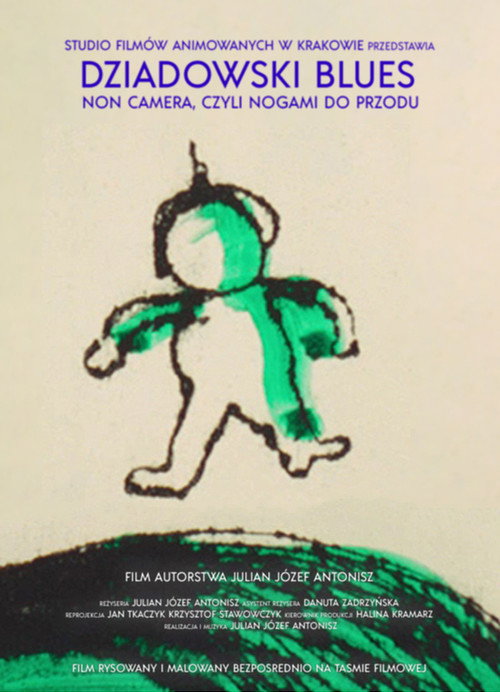
Dziadowski's Blues Non Camera, ie Legs Forward 1978
Dive into the hauntingly poetic world of *Dziadowski's Blues Non Camera, ie Legs Forward* (1978), a groundbreaking animated short that defies convention by eschewing a camera entirely.
Director: Julian Józef Antonisz
Frequently Asked Questions
What is Dziadowski's Blues Non Camera, ie Legs Forward (1978) about?
This animated short dives into a grandfather's ballad, where the protagonist confronts the brutal realities of the modern world through surreal, hand-painted imagery. Explosions, accidents, and violence collide with existential questions, all rendered without a traditional camera.
Who directed Dziadowski's Blues Non Camera, ie Legs Forward?
The film was directed by Julian Józef Antonisz, an innovative animator renowned for his experimental techniques and contributions to Polish avant-garde cinema.
Who stars in Dziadowski's Blues Non Camera, ie Legs Forward?
Cast details for this short film are not publicly available.
Is Dziadowski's Blues Non Camera, ie Legs Forward (1978) worth watching?
As a minimalist animated drama, it's a niche but powerful experience for lovers of experimental film. While it lacks mainstream appeal, its artistic innovation and thematic depth make it a compelling watch for those seeking something truly unique.
How long is Dziadowski's Blues Non Camera, ie Legs Forward?
The runtime of *Dziadowski's Blues Non Camera, ie Legs Forward* is 8 minutes.
About Dziadowski's Blues Non Camera, ie Legs Forward (1978) — Julian Józef Antonisz's Hand-Painted Ode to Humanity's Darkest Instincts
Dive into the hauntingly poetic world of *Dziadowski's Blues Non Camera, ie Legs Forward* (1978), a groundbreaking animated short that defies convention by eschewing a camera entirely. Director Julian Józef Antonisz crafts this eight-minute masterpiece by painting and drawing directly onto film, transforming his grandfather's ballad into a visceral meditation on human cruelty. The film weaves together stark, apocalyptic imagery—exploding rockets, plummeting cars, policemen firing shots—with the recurring figure of a narrator grappling with the inexplicable horrors of existence. The absence of a camera lends an eerie, tactile quality to the animation, immersing viewers in a dreamlike yet devastatingly real exploration of chaos and despair.
Antonisz's experimental technique breathes life into the ballad, using the film strip itself as a canvas to convey raw emotion. The juxtaposition of personal reflection against the backdrop of societal violence creates a poignant, almost allegorical atmosphere, where every stroke feels like a cry against the absurdity of war and indifference. The film's brevity belies its depth, leaving a lasting impression of artistic innovation and emotional weight, making it a must-see for fans of avant-garde animation and thought-provoking cinema.