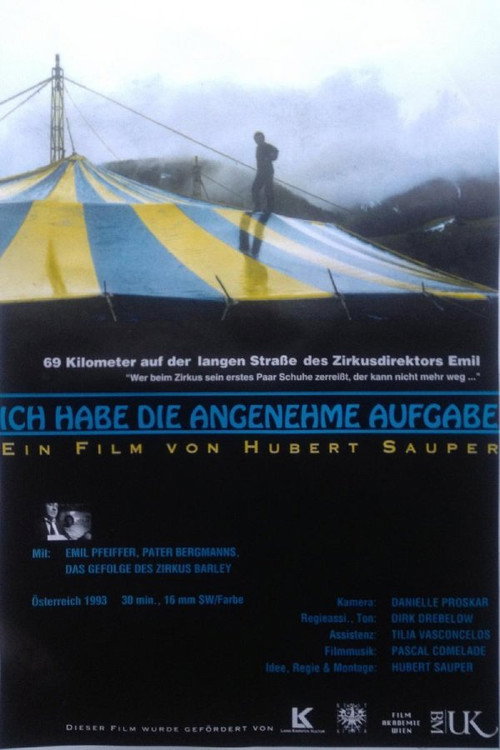
Ich habe die angenehme Aufgabe... 1993
Hubert Sauper's 1993 documentary *Ich habe die angenehme Aufgabe...* follows Emil Pfeiffer, a seasoned circus director whose rounds through villages across the countryside become both a ritual and a relentless question.
Director: Hubert Sauper
Cast
Frequently Asked Questions
What is *Ich habe die angenehme Aufgabe... (1993)* about?
The film chronicles Emil Pfeiffer, an aging circus director who travels from village to village, greeting crowds with a weary determination. As he performs his role time and again, the line between duty and personal meaning begins to blur, turning his journey into an intimate exploration of resilience and reflection.
Who directed *Ich habe die angenehme Aufgabe...?
Hubert Sauper directed this documentary, crafting a minimalist yet evocative portrait of Emil Pfeiffer's quiet battles.
Who stars in *Ich habe die angenehme Aufgabe...?
Emil Pfeiffer takes center stage as the film's protagonist, with Hubert Sauper's direction shaping the narrative around his experiences.
Is *Ich habe die angenehme Aufgabe... (1993)* worth watching?
While the film is brief and unrated on IMDb, its understated power lies in its emotional honesty. For fans of observational documentaries or European cinema, it offers a brief but memorable meditation on aging, purpose, and the weight of routine.
How long is *Ich habe die angenehme Aufgabe...*?
The runtime is approximately 35 minutes.
About Ich habe die angenehme Aufgabe... (1993) — A tender documentary on purpose and performance
Hubert Sauper's 1993 documentary *Ich habe die angenehme Aufgabe...* follows Emil Pfeiffer, a seasoned circus director whose rounds through villages across the countryside become both a ritual and a relentless question. The film frames Emil's journey as a quiet meditation on purpose and endurance, capturing the weary grace of a man who keeps performing even when the applause feels hollow. Shot in stark, observational style, the short documentary lingers on Emil's weathered face and the fleeting moments of connection between performer and audience, transforming a seemingly simple greeting into a poignant metaphor for life's persistent, unanswered questions.
The atmosphere is understated yet deeply human, blending the nostalgia of the circus tradition with the raw honesty of Emil's internal struggle. Sauper's lens turns routine into revelation, suggesting that the most profound stories aren't found in grand gestures but in the spaces between them—where fatigue meets dignity and duty blurs into doubt.