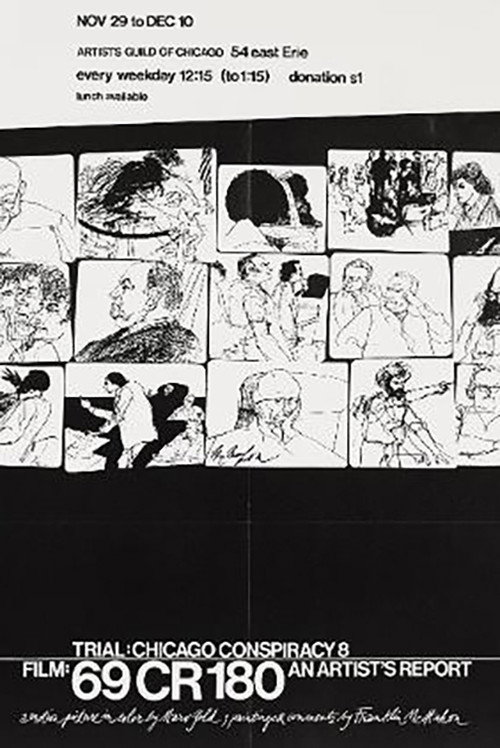
69 CR 180 1971
Dive into the raw, unfiltered pulse of 1960s dissent with *69 CR 180 (1971)*, an extraordinary artist's chronicle of one of America's most explosive trials.
Director: Marv Gold
Cast
Frequently Asked Questions
What is 69 CR 180 (1971) about?
This 59-minute film is a visual and oral account of the Chicago 8 conspiracy trial, where artist Franklin McMahon documented the five-month legal battle through nearly 500 courtroom drawings. Blending sketches with firsthand testimony, it explores the protests of the 1968 Democratic Convention and their aftermath through the eyes of those involved.
Who directed 69 CR 180?
The film was directed by Marv Gold, who collaborated with artist Franklin McMahon to bring this historic trial to life through a unique artistic lens.
Who stars in 69 CR 180?
The documentary features artist Franklin McMahon alongside voices and commentary from those directly involved in the Chicago 8 trial, including defendants, lawyers, and witnesses.
Is 69 CR 180 (1971) worth watching?
For viewers interested in 1960s counterculture, legal history, or art as activism, *69 CR 180* is a compelling watch. Though unrated, its unique blend of historical documentation and artistic expression makes it a standout film for those seeking a deeper understanding of the era's political and social tensions.
How long is 69 CR 180?
The runtime for *69 CR 180* is 59 minutes.
About 69 CR 180 (1971) — A Courtroom Transformed into Art by Franklin McMahon
Dive into the raw, unfiltered pulse of 1960s dissent with *69 CR 180 (1971)*, an extraordinary artist's chronicle of one of America's most explosive trials. Directed by Marv Gold and anchored by the vivid courtroom sketches of artist Franklin McMahon, this 59-minute visual report immerses viewers in the five-month Chicago 8 conspiracy trial—the legal aftermath of the 1968 Democratic National Convention protests. Through McMahon's nearly 500 courtroom drawings, paired with firsthand accounts from those who lived through the proceedings, the film captures the tension, moral complexity, and generational clash of ideals that defined an era. Expect a stark, almost cinematic confrontation with justice, politics, and the power of visual storytelling.
More than a documentary, *69 CR 180* is a time capsule of dissent and democracy. The film strips away legal jargon to reveal the human stories behind the headlines—voices of protesters, lawyers, and defendants echoing against the backdrop of a nation divided. With its raw aesthetic and unflinching gaze, this artist report transforms courtroom procedure into a gripping narrative about freedom and resistance. Ideal for history buffs, art lovers, and anyone drawn to stories where art meets activism.
It's a rare glimpse into a pivotal moment in American history, told through the lens of an artist who stood in the courtroom every day, pen in hand.