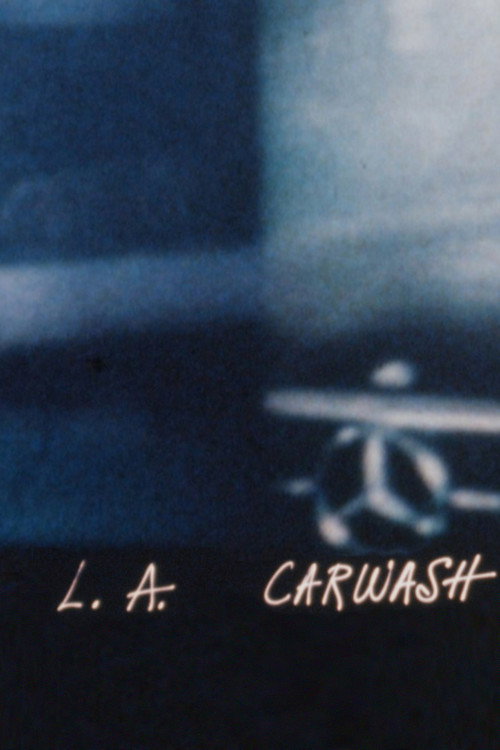
L.A. Carwash 1975
Dive into the avant-garde world of Janis Crystal Lipzin's L.A. Carwash (1975), an intriguing 8-minute experimental short that challenges conventional cinema.
Director: Janis Crystal Lipzin
Frequently Asked Questions
What is L.A. Carwash (1975) about?
This experimental short film by Janis Crystal Lipzin explores the interplay of light and sound at a Los Angeles carwash. The visuals and audio exist as separate entities, briefly overlapping for just four seconds, creating a mesmerizing yet abstract cinematic experience.
Who directed L.A. Carwash?
L.A. Carwash was directed by Janis Crystal Lipzin, an artist known for pushing the boundaries of experimental filmmaking through innovative techniques like dual projection.
Who stars in L.A. Carwash?
Director information is not available.
Is L.A. Carwash (1975) worth watching?
As an experimental short with no IMDb rating, L.A. Carwash is best suited for viewers curious about avant-garde cinema. Its fleeting, abstract approach may not appeal to everyone, but it offers a unique snapshot of 1970s experimental filmmaking worth exploring for its bold creativity.
How long is L.A. Carwash?
L.A. Carwash (1975) runs for 8 minutes.
About L.A. Carwash (1975) — Janis Crystal Lipzin's Experimental Short Film Explained
Dive into the avant-garde world of Janis Crystal Lipzin's L.A. Carwash (1975), an intriguing 8-minute experimental short that challenges conventional cinema. Filmed at a bustling Village Carwash in Los Angeles, the film plays with dual projection techniques, separating sound and image into distinct experiences that briefly collide for just four seconds. Lipzin crafts a mesmerizing interplay of light and shadow, sound and silence, creating a sensory puzzle that lingers long after the credits roll. The film's abstract nature invites viewers to explore the boundaries of perception, where the mundane setting of a carwash transforms into a canvas for artistic experimentation.
L.A. Carwash (1975) is a bold departure from traditional narrative filmmaking, embracing a purely experimental approach that prioritizes mood and texture over plot. The film's unique structure—where audio and visuals operate independently yet harmonize in fleeting moments—challenges audiences to engage with cinema in a fresh, thought-provoking way. Whether you're a fan of avant-garde art or simply curious about the evolution of experimental film, this short offers a captivating glimpse into the creative possibilities of the medium.