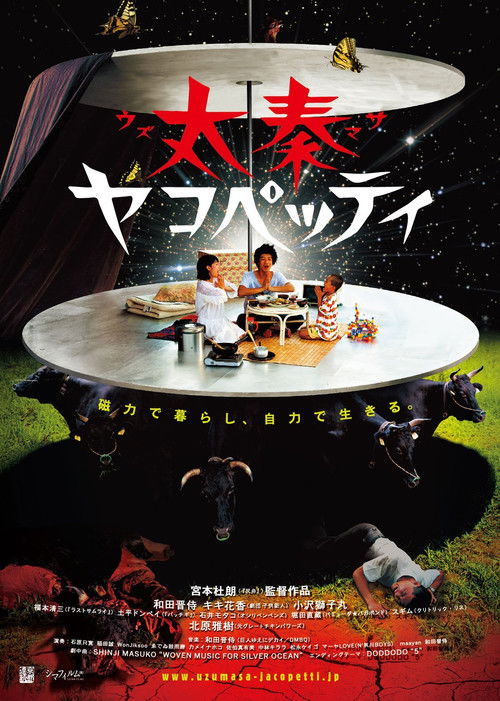
Uzumasa Jacopetti 2013
Director Morirō Miyamoto's 2013 comedy Uzumasa Jacopetti nestles in Kyoto's Uzumasa district, where Shoji Hyakkan shares a modest life with his wife and young child. Everything shifts when his quirky plan to construct a house held together by magnets takes a bizarre turn.
Director: Morirô Miyamoto
Cast

Frequently Asked Questions
What is Uzumasa Jacopetti (2013) about?
A Kyoto family's tranquil days are upended when Shoji Hyakkan's magnet house project attracts unwanted attention. After a stolen cow's hide becomes part of the design, a chance police sighting leads to an unconventional deal that keeps the odd construction saga rolling.
Who directed Uzumasa Jacopetti?
Morirō Miyamoto directed Uzumasa Jacopetti, steering the film's deadpan comedy and gentle satire set against Kyoto's everyday scenery.
Who stars in Uzumasa Jacopetti?
Shinji Wada headlines the cast alongside Hanaka Kiki and Masaki Kitahara in key roles that drive the film's offbeat charm.
Is Uzumasa Jacopetti (2013) worth watching?
With its 83-minute runtime and gentle humor, Uzumasa Jacopetti offers a light, observational comedy perfect for fans of quirky slices-of-life. While it lacks mainstream polish, its dry wit and local color make it a satisfying niche pick.
How long is Uzumasa Jacopetti?
Uzumasa Jacopetti runs 83 minutes in total.
🎥 Trailer
About Uzumasa Jacopetti (2013) — Kyoto's Absurd Magnet House Comedy Explained
Director Morirō Miyamoto's 2013 comedy Uzumasa Jacopetti nestles in Kyoto's Uzumasa district, where Shoji Hyakkan shares a modest life with his wife and young child. Everything shifts when his quirky plan to construct a house held together by magnets takes a bizarre turn. Shadowy figures pilfer a cow, its hide destined to become flashy wall décor, and a chance encounter with the ever-suspicious Police Officer Kobayakawa lands Hyakkan in an offbeat negotiation. The film blends deadpan absurdity with the rhythms of everyday Kyoto life, turning a mundane neighborhood into the stage for low-stakes chaos.
Stripped of moral gravity and dressed in gentle satire, Uzumasa Jacopetti asks how far eccentricity can push social boundaries before authority steps in. Miyamoto's direction keeps the tone breezy and observational, while the small cast delivers dry, understated performances that let the film's oddball logic unfold without fanfare.