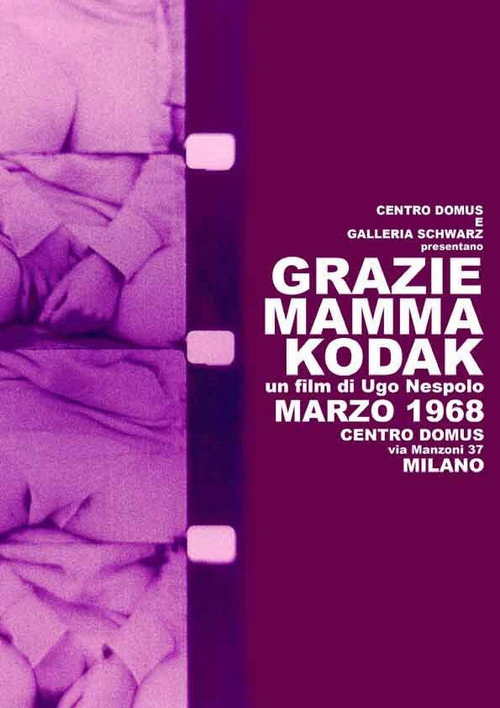
Grazie mamma Kodak 1968
Grazie mamma Kodak (1968) marks the striking debut of visionary Italian artist and filmmaker Ugo Nespolo, a short experimental film that blends playful visual wit with nostalgic warmth.
Director: Ugo Nespolo
Cast
Frequently Asked Questions
What is Grazie mamma Kodak (1968) about?
This nine-minute experimental short by Ugo Nespolo is a poetic tribute to photography and memory, where everyday moments are framed with warmth and nostalgia. The film reflects on the role of analog cameras like Kodak in preserving personal history, blending humor with melancholy.
Who directed Grazie mamma Kodak?
Grazie mamma Kodak was directed by Ugo Nespolo, marking his first film as a filmmaker. Nespolo later became renowned for his innovative work across cinema, animation, and visual arts.
Who stars in Grazie mamma Kodak?
The cast includes Daniela Chiaperotti, Max Pellegrini, and Annamaria Saroni in key roles.
Is Grazie mamma Kodak (1968) worth watching?
As a debut short film with a runtime of just nine minutes, Grazie mamma Kodak is best appreciated for its artistic ambition and nostalgic tone. Its experimental nature and cultural context make it a fascinating watch for fans of Italian avant-garde cinema, though it may not appeal to those seeking traditional narratives.
How long is Grazie mamma Kodak?
Grazie mamma Kodak has a runtime of 9 minutes.
About Grazie mamma Kodak (1968) — The Debut Short Film That Captured a Generation's Nostalgia
Grazie mamma Kodak (1968) marks the striking debut of visionary Italian artist and filmmaker Ugo Nespolo, a short experimental film that blends playful visual wit with nostalgic warmth. Clocking in at just nine minutes, this early work captures the essence of 1960s Italian culture through a whimsical lens, where everyday objects become poetic symbols. The film's intimate black-and-white aesthetic evokes the timeless magic of analog photography—echoing the Kodak camera's enduring legacy—while exploring themes of memory, family, and the fleeting beauty of moments captured in time.
Nespolo's direction is both playful and introspective, weaving a delicate narrative that feels like a love letter to photography's role in preserving life's small joys. The cast—led by Daniela Chiaperotti, Max Pellegrini, and Annamaria Saroni—brings a natural, almost dreamlike energy to the screen, grounding the film's abstract visuals in human emotion. Grazie mamma Kodak (1968) isn't just a film; it's a snapshot of artistic evolution, a fleeting yet profound tribute to the power of the image.
Whether you're a cinephile or a photography enthusiast, this short film offers a rare glimpse into the origins of one of Italy's most innovative multimedia creators.