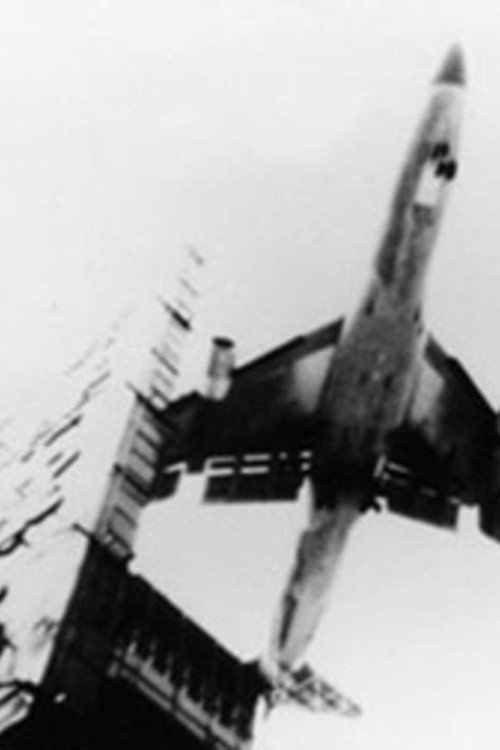
Hong Kong (HKG) 2000
Gerard Holthuis's *Hong Kong (HKG)* (2000) captures the surreal final days of Kai Tak Airport, where planes descended into the heart of the city rather than over it.
Director: Gerard Holthuis
Frequently Asked Questions
What is Hong Kong (HKG) (2000) about?
*Hong Kong (HKG)* is a short but striking documentary that documents the unique approach paths of planes landing at Kai Tak Airport in the late 1990s, just before its closure. The film turns the dramatic descent over skyscrapers and harbor into a cinematic experience, blending aviation history with urban life.
Who directed Hong Kong (HKG)?
The film was directed by Gerard Holthuis, a filmmaker whose work often explores the intersection of technology and human experience.
Who stars in Hong Kong (HKG)?
The documentary features real-life passengers and city dwellers as its central figures, with no traditional cast listed.
Is Hong Kong (HKG) (2000) worth watching?
Despite its short runtime, *Hong Kong (HKG)* offers a visually stunning and historically unique perspective that's rare in film. Its experimental approach makes it a compelling watch for fans of documentaries, urban exploration, or aviation history.
How long is Hong Kong (HKG)?
The film runs for 15 minutes.
About Hong Kong (HKG) (2000) — A 15-Minute Flight Into Urban Magic
Gerard Holthuis's *Hong Kong (HKG)* (2000) captures the surreal final days of Kai Tak Airport, where planes descended into the heart of the city rather than over it. This 15-minute documentary transforms the mundane act of a flight approach into a hypnotic visual poem, blending urban density with aviation marvels. As aircraft skim rooftops and passengers glimpse daily life from cabin windows, the film frames a fleeting moment when technology and cityscape collided. The closing of Kai Tak in 1998 marked the end of an era, and Holthuis's lens freezes that transition in time, turning noise into melody and chaos into harmony.
At its core, *Hong Kong (HKG)* is a love letter to an unconventional urban landscape, where the hum of engines becomes background music to the city's pulse. The documentary's minimal runtime belies its immersive power, offering a meditative reflection on progress, place, and perspective. Shot through the eyes of both travelers and locals, it invites viewers to reconsider the spaces they inhabit and the marvels unfolding above them—even in the most unexpected of settings.