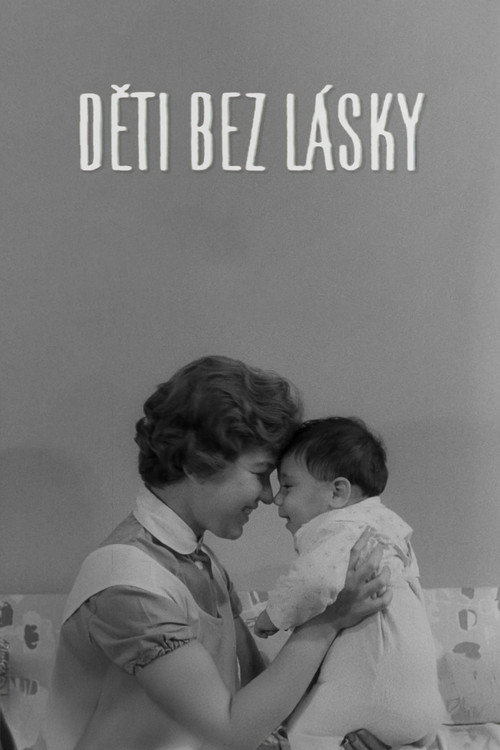
Children Without Love 1963
In the early 1960s, Austrian filmmaker Kurt Goldberger unveiled a stark and thought-provoking documentary that would challenge societal norms and spark international debate.
Director: Kurt Goldberger
Frequently Asked Questions
What is Children Without Love (1963) about?
This documentary investigates the impact of Czechoslovakia's crèche system in the early 1960s, where children were raised in state-run institutions to facilitate full female employment. It reveals the psychological and emotional consequences of emotional deprivation during early childhood.
Who directed Children Without Love?
The film was directed by Kurt Goldberger, an Austrian filmmaker known for his socially conscious documentaries.
Who stars in Children Without Love?
The documentary features observational footage of young children in state care, with no credited actors.
Is Children Without Love (1963) worth watching?
While not a mainstream release, *Children Without Love* is a historically significant and emotionally powerful documentary. Its stark portrayal of institutional neglect makes it a must-watch for fans of social issue films and early European cinema.
How long is Children Without Love?
The runtime of *Children Without Love* is 43 minutes.
Children Without Love (1963): A Groundbreaking Documentary on Institutional Neglect
In the early 1960s, Austrian filmmaker Kurt Goldberger unveiled a stark and thought-provoking documentary that would challenge societal norms and spark international debate. *Children Without Love (1963)* delves into the hidden consequences of Czechoslovakia's expansive state-run childcare system, designed to support full female employment under communist policies. Through a compelling blend of psychiatric research and raw observational footage, Goldberger exposes the emotional and developmental toll on children raised in understaffed crèches, where affection and stimulation were often in short supply. The film's unflinching portrayal of institutional neglect resonated deeply with audiences and experts alike, making it a pivotal work in the history of social documentaries.
Filmed during a time of ideological experimentation, *Children Without Love* transcends mere historical curiosity to deliver a timeless critique of institutionalized care. Goldberger's lens captures silent moments of longing in the eyes of young children, their resilience and vulnerability framed against the cold, bureaucratic machinery of the state. Though controversial upon release, the documentary's message endured, influencing child welfare policies far beyond its borders. Today, it stands as a poignant reminder of the irreplaceable role of love and human connection in early childhood development.