Brindisi '65 1966
"The images of the faces of the workers, once young laborers in the fields, are placed in dialectical counterpoint with a puppet show that tells the same story of marginalization and social injustice."
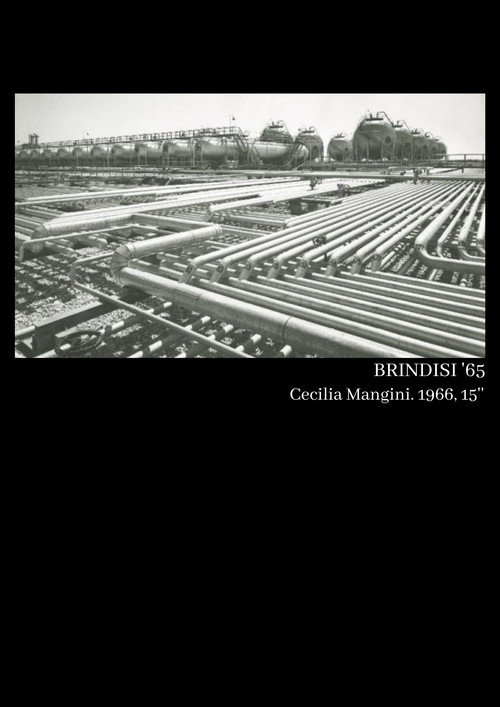
Cecilia Mangini's *Brindisi '65 (1966)* captures a stark moment in time, contrasting a city rooted in peasant life with the rapid industrialization that threatened to erase its past.
Director: Cecilia Mangini
Frequently Asked Questions
What is Brindisi '65 (1966) about?
Cecilia Mangini's documentary contrasts a traditional Southern Italian city with the rise of a petrochemical industry that displaced workers. Through stark images and a surreal puppet show, it reveals the human cost of economic change and political neglect.
Who directed Brindisi '65?
The film was directed by Cecilia Mangini, a pioneering Italian filmmaker known for her socially conscious documentaries that amplify marginalized voices.
Who stars in Brindisi '65?
Director information is not available.
Is Brindisi '65 (1966) worth watching?
As a 15-minute documentary, *Brindisi '65* packs incredible emotional weight and historical relevance, especially for fans of Italian neorealism and political cinema. While unrated, its raw storytelling and Mangini's bold perspective make it a compelling watch for cinephiles.
How long is Brindisi '65?
The runtime is 15 minutes.
About Brindisi '65 (1966) — A Short but Powerful Documentary on Industrialization and Inequality
Cecilia Mangini's *Brindisi '65 (1966)* captures a stark moment in time, contrasting a city rooted in peasant life with the rapid industrialization that threatened to erase its past. Shot in 15 minutes of raw documentary power, the film immerses viewers in Brindisi's working-class neighborhoods, where the dreams of young laborers clash with the harsh realities of layoffs and political favoritism.
Through haunting images of exhausted workers and the decadent opulence of the elite, Mangini paints a portrait of social injustice that lingers. A puppet show—where a starving figure symbolizes the worker—serves as a surreal yet poignant commentary on marginalization, tying together the film's themes of displacement and resistance.