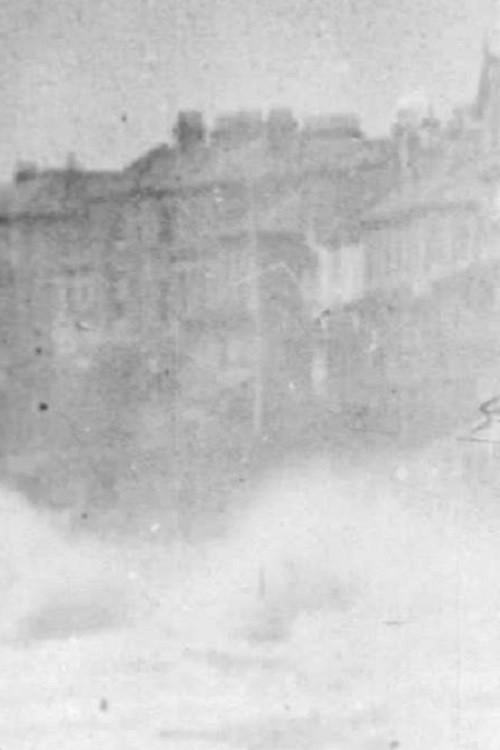
Storm at Sandown I.O.W. 1900
Dating back to 1900, *Storm at Sandown I.O.W.* offers a fleeting but fascinating glimpse into Victorian-era cinematography, capturing the raw power of coastal waves with a historical lens.
Frequently Asked Questions
What is Storm at Sandown I.O.W. (1900) about?
A short silent film capturing the dramatic waves of Sandown on the Isle of Wight, shot in the late Victorian era. The footage focuses on crashing water and composition rather than a traditional story, offering a glimpse into early filmmaking techniques.
Who directed Storm at Sandown I.O.W.?
Director information is not available.
Who stars in Storm at Sandown I.O.W.?
Cast details are not listed for this early silent film.
Is Storm at Sandown I.O.W. (1900) worth watching?
While not a conventional movie, *Storm at Sandown I.O.W.* is a fascinating historical piece for silent-film fans. Its value lies in its rarity as a 1900 coastal footage rather than entertainment value, making it more of an archival curiosity than a must-see film.
How long is Storm at Sandown I.O.W.?
The film runs for 1 minute.
Storm at Sandown I.O.W. (1900): A Century-Old Coastal Storm in Rare Footage
Dating back to 1900, *Storm at Sandown I.O.W.* offers a fleeting but fascinating glimpse into Victorian-era cinematography, capturing the raw power of coastal waves with a historical lens. Though the director and cast remain unidentified, the surviving footage reveals a deliberate choice of perspectives—two carefully composed shots from dramatic angles. Sadly, time has not been kind to this nitrate print; decay and exposure issues blur the image, while the unsteady frame betrays the technical limitations of early filmmaking. Despite its imperfections, the short captures an evocative moment in film history, preserving the thrill of nature's fury through the primitive eye of a century-old camera.
For film scholars and silent-era enthusiasts, *Storm at Sandown I.O.W.* is less about narrative and more about atmosphere—a haunting testament to the medium's infancy. The grainy visuals and flickering frames lend an air of nostalgia, transporting viewers to a time when every frame was a novelty. While the storm itself becomes the silent protagonist, the film's decay only deepens its mystique, making it a compelling artifact rather than a conventional motion picture.