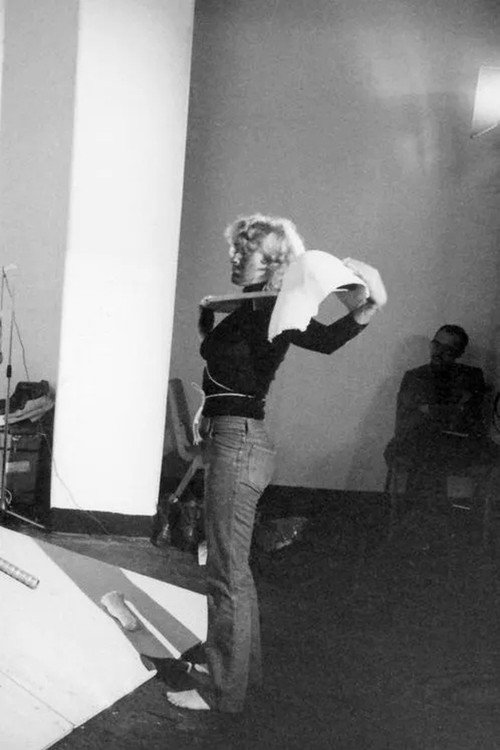
Delta. A Piece 1977
Valie Export's *Delta. A Piece* (1977) is a bold, 18-minute drama that dissects the power dynamics of mixed-gender relationships through striking visual symbolism.
Director: Valie Export
Frequently Asked Questions
What is Delta. A Piece (1977) about?
*Delta. A Piece* examines the fraught dynamics of gender relations through the lens of body language, using shoulders and hands as symbols of historical oppression and resistance. The film strips away conventional dialogue to expose the raw, unspoken power struggles embedded in everyday gestures.
Who directed Delta. A Piece?
The film was directed by Valie Export, a pioneering Austrian avant-garde artist known for her provocative exploration of feminist themes and body politics.
Who stars in Delta. A Piece?
Cast details for *Delta. A Piece* are not publicly listed, reflecting its experimental and abstract focus rather than a traditional narrative cast.
Is Delta. A Piece (1977) worth watching?
While unrated on IMDb, *Delta. A Piece* holds significant cultural and artistic value as a bold feminist statement in experimental cinema. Its 18-minute runtime and abstract approach make it a niche but rewarding watch for fans of avant-garde filmmaking and gender studies.
How long is Delta. A Piece?
The runtime of *Delta. A Piece* is 18 minutes.
About Delta. A Piece (1977) — Valie Export's Bold Feminist Experiment in 18 Minutes
Valie Export's *Delta. A Piece* (1977) is a bold, 18-minute drama that dissects the power dynamics of mixed-gender relationships through striking visual symbolism. Using the movement of shoulders and hands—a historical language of body communication—Export dismantles the entrenched narratives of women's subjugation in male-dominated spaces. The film's intense, experimental atmosphere confronts viewers with a raw, unflinching exploration of control, agency, and the physical markers of oppression. Set against a minimalist backdrop, its stark imagery transforms everyday gestures into a provocative commentary on gender politics.
As a cornerstone of feminist avant-garde cinema, *Delta. A Piece* challenges conventional storytelling, replacing dialogue with visceral motion and historical weight. Its innovative approach invites audiences to question how power is encoded in the simplest of human interactions, leaving a lasting impression of disruption and revelation. The film remains a vital piece of 1970s experimental cinema, celebrated for its audacity and intellectual depth.