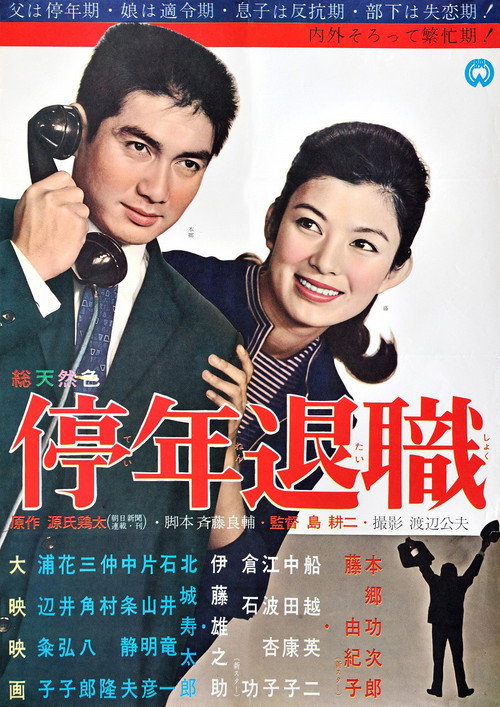
Teinen Taishoku 1963
Kōji Shima's Teinen Taishoku (1963) is a poignant drama that explores the quiet rituals of life during retirement, capturing the emotional weight of transitioning from work to an uncertain future.
Director: Kōji Shima
Cast







Frequently Asked Questions
What is Teinen Taishoku (1963) about?
Teinen Taishoku (1963) tells the story of a retired office worker adjusting to life after decades of routine, finding himself adrift in a world that no longer defines him by his career. The film delicately examines his relationships with family and neighbors as he confronts feelings of irrelevance and seeks small moments of connection.
Who directed Teinen Taishoku?
Kōji Shima directed Teinen Taishoku, known for his focus on humanistic themes and realistic storytelling in Japanese cinema.
Who stars in Teinen Taishoku?
The film features Eiji Funakoshi, Yukiko Fuji, Isao Kuraishi, Kumeko Urabe, and Yasuko Nakada in key roles.
Is Teinen Taishoku (1963) worth watching?
While Teinen Taishoku isn't widely rated, its genre-driven realism and thoughtful exploration of aging make it a rewarding experience for drama enthusiasts. The film's emotional depth and Shima's careful direction elevate it beyond a simple retirement narrative.
How long is Teinen Taishoku?
Teinen Taishoku runs for 92 minutes.
About Teinen Taishoku (1963) — A Retired Life's Quiet Struggles in Post-War Japan
Kōji Shima's Teinen Taishoku (1963) is a poignant drama that explores the quiet rituals of life during retirement, capturing the emotional weight of transitioning from work to an uncertain future. Set against the backdrop of post-war Japan, the film follows a retired salaryman whose days now stretch empty, revealing how societal expectations clash with personal fulfillment. The tone is understated yet deeply human, as the protagonist grapples with loneliness and the search for purpose, framed by the stark simplicity of everyday routines. Shima's direction emphasizes realism, using subtle performances and evocative settings to convey themes of isolation and resilience.
Teinen Taishoku (1963) stands out for its sensitive portrayal of aging and societal change, resonating with anyone who has ever faced the disorienting shift of retirement. The film's atmosphere is melancholic but not despairing, inviting viewers to reflect on their own relationships with work and community. With its focus on intimate, character-driven storytelling, it offers a rare glimpse into the quiet struggles of ordinary people, making it a compelling watch for fans of slow-burn dramas.