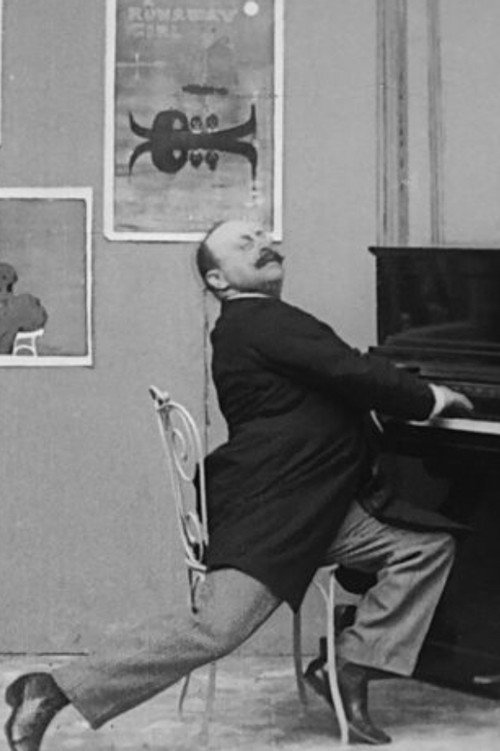
Le Maître de ballet 1900
Step back to the dawn of cinema with *Le Maître de ballet (1900)*, a fleeting but fascinating early film directed by Marguerite Vrignault that blends mischief and melancholy in just three minutes.
Director: Marguerite Vrignault
Cast
Frequently Asked Questions
What is Le Maître de ballet (1900) about?
This early silent short follows a ballet instructor who attempts to train a group of invisible dancers, only to grow increasingly frustrated by their constant mistakes. The film humorously explores themes of artistic perfectionism and the absurdity of invisible labor. Its three-minute runtime packs a surprising punch of wit and visual invention.
Who directed Le Maître de ballet?
The film was directed by Marguerite Vrignault, an early French filmmaker whose work contributes to the fascinating history of pre-cinema storytelling.
Who stars in Le Maître de ballet?
The sole credited performer in *Le Maître de ballet* is Jules Moy, whose expressive performance drives the film's comedic core.
Is Le Maître de ballet (1900) worth watching?
As a historical curiosity, *Le Maître de ballet* is absolutely worth watching for fans of early cinema or silent comedy. While it's not a narrative masterpiece, its playful premise and technological novelty make it a charming time capsule. There's no IMDb rating to reference, but its cultural significance speaks for itself.
How long is Le Maître de ballet?
The film runs for approximately 3 minutes.
🎥 Trailer
Le Maître de ballet (1900): The Hilarious Early Comedy You've Never Seen — Full Details
Step back to the dawn of cinema with *Le Maître de ballet (1900)*, a fleeting but fascinating early film directed by Marguerite Vrignault that blends mischief and melancholy in just three minutes. This silent short stars Jules Moy as a stern ballet instructor whose invisible students—an imaginary corps de ballet—fail to meet his exacting standards, sparking a comedic battle of discipline and incompetence. The film's playful satire gently pokes fun at artistic pretension while capturing the whimsical possibilities of early motion pictures, where even the intangible could be made visible on screen.
With its black-and-white charm and early experiments in synchronized sound, *Le Maître de ballet* offers a quirky snapshot of late 19th-century stage culture as seen through the lens of pioneering filmmaking. The atmosphere is lighthearted yet tinged with an undercurrent of frustration, as the teacher's exasperation mirrors the growing pains of a new art form trying to define itself. Though obscure today, Vrignault's film remains a delightful curiosity for cinephiles and historians alike, a tiny time capsule of laughter that predates even the earliest narrative experiments.