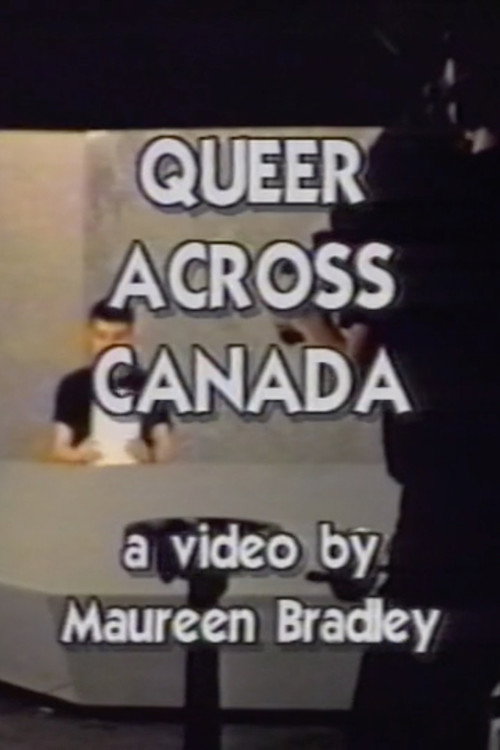
Queer Across Canada 1993
Maureen Bradley's *Queer Across Canada (1993)* is a sharp, 10-minute comedy that explores how identity shifts with geography.
Director: Maureen Bradley
Frequently Asked Questions
What is *Queer Across Canada* (1993) about?
*Queer Across Canada* follows director Maureen Bradley on a cross-country journey, questioning how identity changes with location. The film contrasts personal labels like 'lesbian' or 'dyke' with mainstream media portrayals, blending humor and reflection. It's a snapshot of queer life in early '90s Canada.
Who directed *Queer Across Canada*?
Maureen Bradley directed *Queer Across Canada*. Known for her work with CBC's Road Movies, Bradley brings a documentary-style lens to this comedic exploration of identity.
Who stars in *Queer Across Canada*?
Director information is not available.
Is *Queer Across Canada* (1993) worth watching?
As a 10-minute comedy with themes of identity and media representation, *Queer Across Canada* offers a unique perspective. While not widely rated, its cultural significance andBradley's sharp direction make it a curious watch for fans of queer cinema and short films.
How long is *Queer Across Canada*?
The runtime is 10 minutes.
About Queer Across Canada (1993) — A Comedy Road Trip Through Queer Identity
Maureen Bradley's *Queer Across Canada (1993)* is a sharp, 10-minute comedy that explores how identity shifts with geography. Through the lens of a cross-country journey with CBC's Road Movies, Bradley examines whether queerness is shaped by the places we call home—Vancouver, Calgary, Whitehorse, and beyond. The film captures the tension between personal truth and media representation, asking whether labels like 'lesbian' or 'dyke' are defined by community or imposed by mainstream narratives. With a playful yet probing tone, *Queer Across Canada* blends humor with introspection, offering a snapshot of queer life in early '90s Canada.
This short film stands out for its candid approach to identity politics, using Bradley's road trip as a metaphor for the fluidity of self-perception. The atmosphere is both nostalgic and rebellious, reflecting the era's burgeoning queer visibility and the challenges of being seen on your own terms. A hidden gem in Canadian cinema, it invites viewers to question how location and culture mold who we are—and whether we get to define ourselves before the world does.