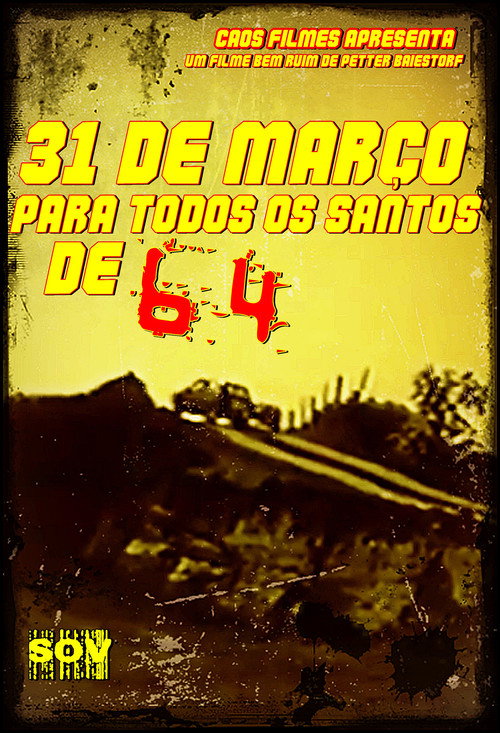
March 31 2004
Dive into the chaotic 8-minute micro-drama March 31 (2004), a Brazilian historical satire that packs a punch far beyond its short runtime.
Director: Petter Baiestorf
Cast


Frequently Asked Questions
What is March 31 (2004) about?
March 31 (2004) is a short film set in 1960s Brazil, where a right-wing authoritarian government tortures political dissidents under the guise of defending global democracy. The absurdity of this hypocrisy is exposed through dark comedy and gritty visuals.
Who directed March 31?
March 31 was directed by Petter Baiestorf, a filmmaker known for blending exploitation aesthetics with political and social commentary.
Who stars in March 31?
The film stars Claudio Baiestorf and Carli Bortolanza in the lead roles, delivering performances that amplify the film's raw and satirical tone.
Is March 31 (2004) worth watching?
At just 8 minutes long, March 31 (2004) is a punchy, unrated curiosity that offers a bold critique of historical oppression. While not for everyone, its audacity and brevity make it a memorable watch for fans of underground cinema and political satire.
How long is March 31?
March 31 (2004) runs for approximately 8 minutes.
About March 31 (2004) — Brazil's Dictatorship Satirized in a 8-Minute Grindhouse Masterpiece
Dive into the chaotic 8-minute micro-drama March 31 (2004), a Brazilian historical satire that packs a punch far beyond its short runtime. Directed by Petter Baiestorf, this explosive short film weaves together the brutal realities of 1960s Brazil with a darkly comedic edge, exploring the absurd contradictions of a right-wing regime selling global democracy while enforcing brutal oppression at home. Set against the grimy backdrop of pigsties repurposed as torture chambers, the film blends grindhouse aesthetics with biting political commentary, creating an atmosphere that's equal parts unsettling and darkly hilarious.
March 31 (2004) isn't just a historical footnote—it's a visceral critique cloaked in genre-shifting irreverence. With lead performances from Claudio Baiestorf and Carli Bortolanza, the film oscillates between stark realism and exaggerated satire, challenging viewers to confront uncomfortable truths wrapped in absurdity. Though unrated, its raw intensity and compact storytelling make it a cult curiosity for fans of offbeat cinema looking for something that defies expectations and refuses to sugarcoat history.