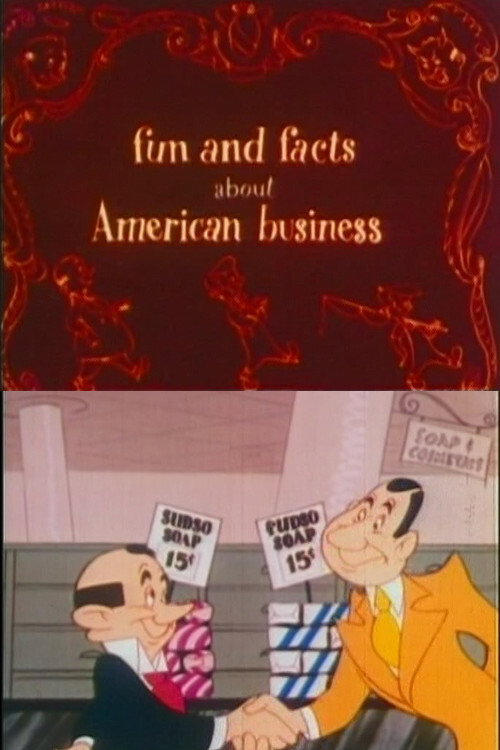
Going Places 1948
Going Places (1948) is a Cold War-era animated short that blends corporate propaganda with playful satire, wrapped in a vintage cartoon aesthetic.
Frequently Asked Questions
What is Going Places (1948) about?
Going Places (1948) is an animated short about Freddie Fudsie, a soap maker who wants to retire and fish all day. When he invents bar soap and earns money, his peaceful plans are interrupted by the tantalizing call of the Profit Motive, challenging his idea of true satisfaction.
Who directed Going Places?
Director information is not available.
Who stars in Going Places?
The standout character is Freddie Fudsie, voiced by an uncredited performer, who embodies the lazy inventor with big dreams and bigger distractions.
Is Going Places (1948) worth watching?
As a 9-minute vintage cartoon with a unique blend of humor and economic messaging, Going Places offers nostalgic appeal for animation and Cold War history fans. Its narrow focus and dated themes may limit broad interest, but it's a curious snapshot of its era.
How long is Going Places?
Going Places has a runtime of 9 minutes.
About Going Places (1948) — A Whimsical Cold War Cartoon on Profit and Leisure
Going Places (1948) is a Cold War-era animated short that blends corporate propaganda with playful satire, wrapped in a vintage cartoon aesthetic. This nine-minute film, part of a seven-part series exploring American business, follows Freddie Fudsie, a lax soap maker who dreams of trading work for leisurely fishing trips. His life takes a turn when he invents bar soap, strikes financial fortune, and prepares for a quiet retirement—only to be lured by the alluring "Profit Motive," a seductive embodiment of capitalism's incentives. The cartoon's charm lies in its sharp contrast between bucolic leisure and the relentless pull of productivity, all delivered with the smooth animation and cheeky humor of mid-century studio cartoons.
Directed with a focus on economic education, Going Places (1948) uses animation to distill complex concepts like profit motives and purchasing power into an accessible, entertaining format. Its themes resonate with postwar optimism and industrial ambition, making it both a curious artifact of its time and a quirky entry in the history of business-themed animation.