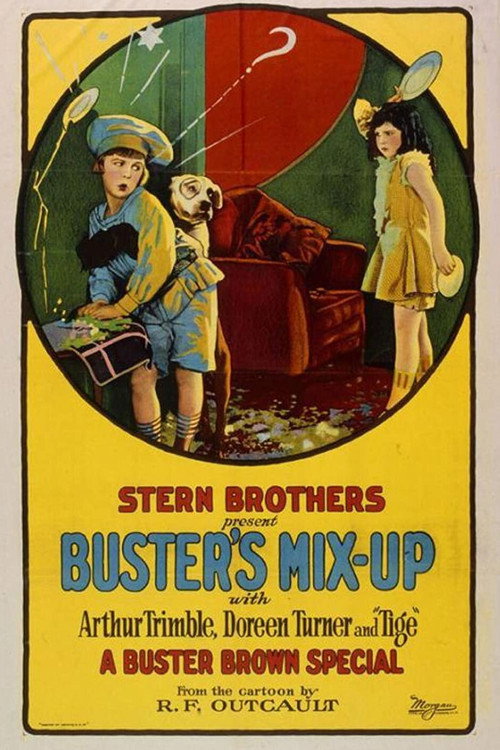
Buster's Mix-Up 1926
Buster's Mix-Up (1926) delivers vintage slapstick comedy gold in just 18 minutes, as the mischievous Buster Brown's jealousy erupts when his sweetheart Mary Jane shifts her attention to a new boy at a party.
Director: Gus Meins
Cast



Frequently Asked Questions
What is Buster's Mix-Up (1926) about?
This 1920s comedy short follows Buster Brown, whose jealousy over his sweetheart Mary Jane's attention to another boy leads to a comical mix-up. A well-meaning dog named Tige tries to smooth things over, but a prank involving tobacco in candy only deepens the trouble.
Who directed Buster's Mix-Up?
Gus Meins directed this silent-era comedy, known for his knack for family-friendly humor and heartwarming storytelling.
Who stars in Buster's Mix-Up?
The film features Arthur Ross Trimble as Buster Brown, alongside Doreen Turner as Mary Jane, Lois Hardwick, Betsy Ann Hisle, and Leon Holmes.
Is Buster's Mix-Up (1926) worth watching?
At just 18 minutes, this short comedy offers a delightful glimpse into 1920s filmmaking. While it hasn't been rated on IMDb, its charm lies in its simplicity, physical humor, and nostalgic appeal for silent film fans and families.
How long is Buster's Mix-Up?
Buster's Mix-Up runs for 18 minutes, making it a quick and entertaining watch.
About Buster's Mix-Up (1926) — Classic 1920s Comedy Short with Buster Brown
Buster's Mix-Up (1926) delivers vintage slapstick comedy gold in just 18 minutes, as the mischievous Buster Brown's jealousy erupts when his sweetheart Mary Jane shifts her attention to a new boy at a party.
Director Gus Meins crafts a lighthearted tale of misunderstanding and reconciliation, with Tige the dog stepping in to mend fences between the squabbling sweethearts. The film blends physical comedy with gentle romantic tension, capturing the carefree spirit of 1920s family entertainment. While a rogue piece of tobacco in a candy sack adds unexpected chaos, the real charm lies in how childhood emotions—like pride and insecurity—play out with hilarious consequences.
This silent-era short stands out for its playful tone and heartwarming resolution, offering a snapshot of early cinema's ability to turn small conflicts into big laughs.